
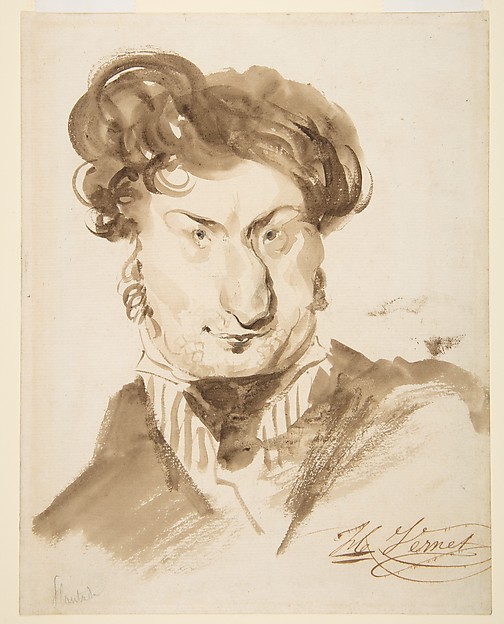
Image title: Caricature of Charles-Henri Plantade (?)
Medium: Pen and brown ink, brush and brown wash and black chalk
Date: 19th century
Source: The Met Collection
“
The meaning I picked, the one that changed my life: Overcome fear, behold wonder.
”
— Richard Bach
The Brush as Mightier: Political Caricatures That Changed History
Introduction: The Art of Caricature
Throughout history, political caricature has been a powerful tool of social critique and transformation. These exaggerated depictions of political leaders and societal issues serve not only to entertain but also to provoke thought, challenge authority, and incite change. In this exploration, we will delve into pivotal periods where the art of caricature influenced public opinion and swayed political tides.
The Seeds of Satire: 18th Century Europe
The origins of political caricature can be traced back to the 18th century, a period rife with political upheaval and intellectual awakening. As the Enlightenment spread across Europe, artists like James Gillray in Britain harnessed satire to critique the ruling classes. Gillray’s biting wit spared no one, from King George III to Napoleon Bonaparte. His works, such as ‘The Plumb-pudding in Danger’, depicted leaders as childish, egotistical figures, diminishing their grandeur and making them relatable targets for public ridicule. Such artwork played a pivotal role in shaping public perceptions during tumultuous times.
From Revolution to Nation: The 19th Century
The 19th century was a canvas painted with revolutions, and caricature reflected and influenced these seismic shifts. In France, the revolutionary spirit was immortalized through artists like Honoré Daumier, who lampooned monarchs and bourgeoisie alike. His lithograph ‘Gargantua’ depicted King Louis-Philippe as a grotesque giant devouring wealth at the expense of the common people. Daumier’s caricatures transcended mere art; they were a form of political participation, challenging the very foundations of power.
The Modern Era: Ink Meets Impact
As the world transitioned into the 20th century, the role of caricature expanded with new technologies. The rise of mass media enabled artists to reach wider audiences faster than ever before. In the United States, Thomas Nast etched his place in history with iconic renditions such as the symbol of the Republican Elephant. Nast’s work not only shaped political discourse but also emboldened burgeoning movements for social change by challenging corruption, such as that of Tammany Hall.
Global Perspectives: Caricature in the Contemporary World
Today, political caricatures continue to wield influence, from the pages of distinguished publications to viral social media platforms. In regions with contested freedoms of expression, such as the Middle East and Asia, artists harness caricature to critique totalitarian regimes and advocate for human rights. Digital tools have further democratized the art form, allowing for instantaneous global discourse. Caricatures in contemporary settings highlight not only political failures but also democracy’s civic role of critique and consciousness.
The Philosophical Edge: Beyond Laughter
The power of caricature lies in its ability to marry artistry with activism, humor with hard truth. The philosophical underpinnings of caricature encourage viewers to question, to reflect, and to act. In an age where information is abundant, caricature distills complicated narratives into impactful visuals. The pen and the brush remain ever-mightier, challenging unyielding systems and shaping the course of history through satire and insight.

Image description: The Plumb-pudding in danger, or, State epicures taking un petit souper. The great Globe itself and all which it inherit [sic], is too small to satisfy such insatiable appetites.
Js. Gillray, inv. & fecit.
SUMMARY: William Pitt, wearing a regimental uniform and hat, sitting at a table with Napoleon. They are each carving a large plum pudding on which is a map of the world.
Pitt's slice is considerably larger than Napoleon's.
MEDIUM: 1 print : etching, hand-colored.
CREATED/PUBLISHED: London : H. Humphrey, 1805 February 26.
According to Wright & Evans, Historical and Descriptive Account of the Caricatures of James Gillray (1851, OCLC 59510372), p. 240, "The new Emperor, and his opponent the English Minister, helping themselves—one taking the land, the other the sea. On the overtures made by the new Emperor for a reconciliation with England in the January of 1805."
Artist: James Gillray
Credit: This image is available from the United States Library of Congress's Prints and Photographs division under the digital ID cph.3g08791.This tag does not indicate the copyright status of the attached work. A normal copyright tag is still required. See Commons:Licensing.
License: Public domain
Source: Wikimedia Commons
Useful links: