
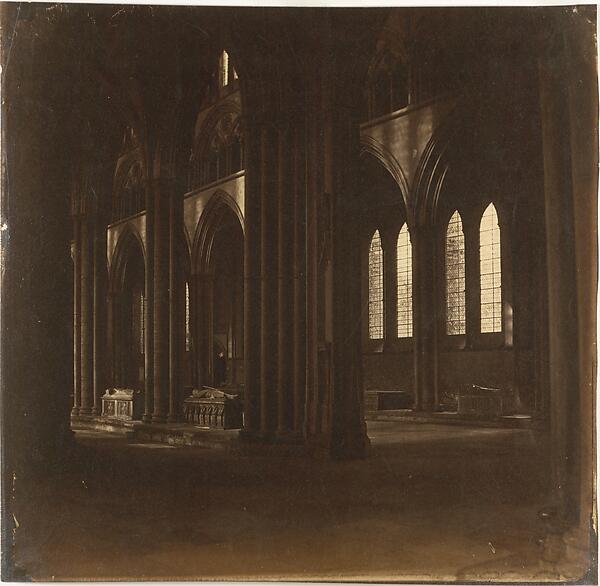
Image title: Salisbury Cathedral – The Nave, from the South Transept
Medium: Albumen silver print from glass negative
Date: 1858
Source: The Met Collection
“
The wisdom of the wise, and the experience of ages, may be preserved by quotation.
”
— Isaac D'Israeli
Through Windows of Time: Stained Glass as Storyteller Across Ages
Introduction
Few art forms are as striking and multifaceted as stained glass. These colorful compositions have transformed sunlight into storytelling since the medieval era, reflecting not only light but also the cultural and philosophical narratives of their times. From the grand cathedrals of the Middle Ages to contemporary public art installations, stained glass has evolved to encapsulate both divine stories and social commentaries, making it a timeless medium for storytelling.
The Medieval Splendor: Biblical Narratives in Glass
The story of stained glass begins in the shadows of towering medieval cathedrals. Originating in the 10th century, this art form found its purpose in illuminating sacred scriptures. During this era, a largely illiterate population relied on these vibrant windows to convey biblical stories in their houses of worship. Each pane served as an illustrated manuscript, with a palette as rich as the tales they told.
Consider the great Notre-Dame de Chartres in France, whose stained-glass windows stand as masterpieces of medieval art. Here, the precise arrangement of colored glass guided congregants through the life of Christ and the saints, offering visual sermons that reinforced religious teachings. The technology of the time—developing techniques of glassmakers and advancements in architectural engineering—enabled these magnificent creations to reach new heights, both literally and figuratively.
Renaissance and Beyond: Reaching for Realism
As the Middle Ages gave way to the Renaissance, the focus of stained glass shifted. With Europe gradually embracing humanism, art turned towards realism and detailed representation. Stained glass artists began experimenting with perspective and shadow, subtly moving beyond religious settings to include more secular subjects, such as portraits and historical events.
This era saw contributions by workshop masters like Bernard van Orley in the Netherlands, whose works were characterized by a fine synthesis of Northern European and Italian Renaissance influences, capturing both the nuanced play of spirituality and human experience. Glassmakers improved their techniques, allowing for finer details and richer colors, which elevated the medium to new artistic potential.
The Industrial Revolution: From Churches to Cities
The Industrial Revolution altered the course of stained glass significantly. Technological advancements in glass production and metalwork made it cheaper and more accessible. With this, stained glass moved beyond church windows to become a fixture in secular and public buildings. One of the most celebrated figures of this time was Louis Comfort Tiffany, whose innovative approach revolutionized stained glass as both window and decorative arts. His iconic works featured new opalescent glass, which created a rich tapestry of color and light that embodied the Art Nouveau movement.
As cities grew, stained glass was increasingly employed in urban architecture, illuminating civic spaces and private residences alike. This era signified a democratization of the medium, extending stained glass’s narrative potential to encompass daily human experience, progress, and even industrial prowess.
The Modern Era: Voices of Change
In the 20th and 21st centuries, stained glass took on new purposes, becoming a vibrant voice for change in public art installations worldwide. Artists like Marc Chagall pushed boundaries by infusing modern expressionist art styles into stained glass, imbuing contemporary, existential themes within the traditional medium.
Today, stained glass is not confined to religious or traditional stories but also addresses social and environmental issues. Works by contemporary artists like Judith Schaechter use stained glass to explore complex human emotions and societal challenges. The art form serves as a reflective mirror that captures and comments on this rapidly changing landscape, telling stories of hope, struggle, and unity.
Conclusion: Enduring Legacy and Future Horizons
Stained glass continues to captivate as a dynamic storyteller across time. Its enduring legacy is a testament to the innate human desire to express, share, and immortalize our stories within the interplay of light and color. Whether adorning sacred spaces or influencing modern architectural design, stained glass remains a luminous chronicle of human history and imagination, forever looking forward while reflecting its storied past.

Image description: Part of stained glass windows in St. Vitus Cathedral, Prague
Artist: Oryg. Pudelek, Mody. Albertus teolog
Credit: Own work
License: CC BY-SA 4.0
Source: Wikimedia Commons
Useful links: