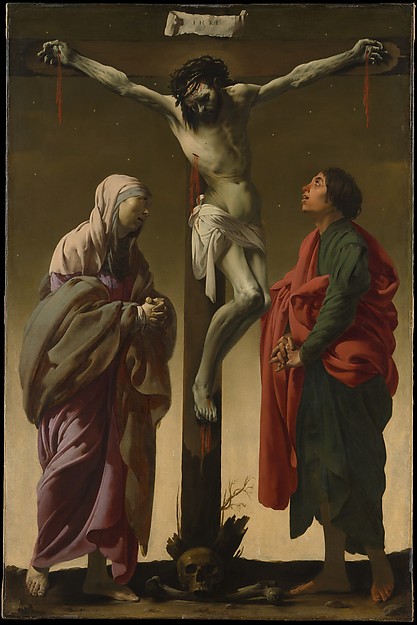
Image title: The Crucifixion with the Virgin and Saint John
Medium: Oil on canvas
Date: ca. 1624–25
Source:
The Met Collection
“
Pitching is the art of instilling fear.
”
— Sandy Koufax
The Geometry of Faith: Islamic Pattern Art Across Centuries
Introduction: Art as Divine Pattern
Across soaring domes, immense courtyards, and glittering tiles, Islamic geometric art tells a story where faith and mathematics converge. With its intricate patterns spreading across mosques, palaces, manuscripts, and, more recently, gallery walls, this art form serves both as a testament to human ingenuity and a meditation on the underlying order of the universe. In this article, we journey through the centuries to understand how Islamic geometric patterns—born from the union of spiritual inspiration and mathematical rigor—became a universal language intertwining beauty, belief, and intellect.
1. Foundations in the Medieval World: Seeds of Sacred Geometry
The genesis of Islamic geometric art lies in the medieval Islamic Golden Age, a period stretching from the 8th to the 14th century. In the bustling intellectual centers of Baghdad, Cairo, and Cordoba, scholars immersed themselves in ancient Greek, Persian, and Indian mathematical texts. This synthesis led not only to breakthroughs in algebra and geometry but also sparked a unique artistic vision: to use abstract forms to evoke the infinite and indescribable nature of God (Allah). Early mosques, such as the Great Mosque of Kairouan in Tunisia or the Umayyad Mosque in Syria, display geometric patterns that serve as visual metaphors for unity and multiplicity—the infinite recreated through the finite.
2. The Floruit of Ornament: Timurid, Safavid, and Ottoman Splendor
The 14th to 17th centuries marked a flowering of geometric ornamentation across Islamic empires. The Timurid dynasty in Central Asia became masters of tilework, employing dazzling star patterns and polygonal mosaics to adorn madrasas and mausoleums in cities like Samarkand and Herat. In Iran, under the Safavids, the art of muqarnas (stalactite vaulting) turned pure geometry into dramatic, dimensional forms, while in Ottoman Turkey, master artisans combined floral and geometric motifs in ceramic tiles gracing the Süleymaniye Mosque and the Topkapi Palace. These patterns reflect not only mastery of spatial logic but a deep philosophical alignment: the universe as a cosmos, ordered yet infinite, every element a sign pointing to the divine order behind creation.
3. Crossroads of Cultures: Interaction and Adaptation
Islamic geometric art was never isolated. As trade routes crisscrossed from the Maghreb to India, patterns, techniques, and philosophical ideas also traveled. By the 15th century, the Alhambra in Spain had become a laboratory of pattern innovation, where artisans experimented with complex symmetries and tiling methods. In Mughal India, geometric patterns merged with indigenous floral designs, blossoming into the luxurious pietra dura inlays of the Taj Mahal. Even beyond the Islamic world, the logic and aesthetics of these patterns inspired Gothic rose windows and Renaissance artists, illustrating how shared principles of harmony and mathematics transcend borders.
4. Spiritual and Philosophical Underpinnings: Seeking the Infinite
Why such devotion to repetition and abstraction? For Muslim artists and theologians, depicting living beings was often avoided in sacred spaces, encouraging a focus on non-figurative forms. Geometry became a spiritual exercise: lines, angles, and shapes symbolized the unchanging laws established by God. The endless repetition of motifs invited contemplation of the infinite, while the precision required in designing these patterns mirrored the discipline and humility demanded by faith. Philosophers like Nasir al-Din al-Tusi and later mystics elaborated on the parallels between geometry and cosmology, making every tessellation a meditation on existence itself.
5. Contemporary Resonance: New Media, Timeless Ideals
Today, Islamic geometric art finds new voice in contemporary installations, digital media, and global design. Artists such as Monir Shahroudy Farmanfarmaian and Dana Awartani reinterpret centuries-old motifs in glass, mirror mosaics, or immersive video projections, reflecting both continuity and innovation. Mathematical software allows creatives to explore higher-dimensional symmetries unimaginable to past generations. Yet, at the heart of these modern expressions remains the same impulse: to capture the perfect balance between order and freedom, matter and spirit. In an age of fragmentation, these patterns offer a visual reminder of interconnection and the search for meaning beyond the surface.
Conclusion: A Living Geometry Across Time
The legacy of Islamic geometric art—fluid yet precise, ancient yet contemporary—serves as a bridge between disciplines, cultures, and epochs. It reveals the profound harmony possible when mathematics and spirituality, creativity and contemplation, come together. As viewers today gaze at centuries-old tiles or digital installations, they join a timeless conversation about beauty, faith, and the endless potential of human imagination.

Image description:
Courtyard filed with colorful paper lantern garlands, and shadows drawing geometrical patterns on the ground, at Bulguksa Buddhist temple, in Gyeongju, South Korea.
License:
CC BY-SA 4.0
Source:
Wikimedia Commons
Useful links: