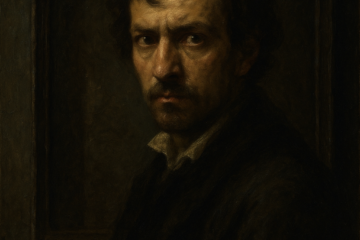
Image title: The Annunciation
Medium: Oil on panel, transferred to canvas
Date: 1480–89
Source:
The Met Collection
“
Pitching is the art of instilling fear.
”
— Sandy Koufax
Art on the Margins: The Surprising Visual Languages of Nomadic Societies
Introduction: Mobility and the Margins of Art History
For centuries, the conventional narratives of art have centered around cities, courts, and settled civilizations. Yet, the world is rich with visual cultures shaped not by the permanence of stone, but by the ebb and flow of movement. Nomadic societies—those communities that traverse deserts, steppes, and grasslands—have developed distinctive aesthetic languages that embody their adaptability, resourcefulness, and philosophies of transience. From the Sahelian camel caravans of Africa to the sweeping yurts of Central Asia and the roving tipis of the Americas, nomadic art forms challenge us to reconsider what it means to create beauty on the move.
Chapter 1: Weaving Stories on the Steppes—Central Asia’s Portable Masterpieces
The vast steppes of Central Asia have nurtured nomadic cultures such as the Mongols, Kazakhs, and Kyrgyz for millennia. Deprived of permanent architecture, these societies poured their creativity into mobile and functional art: intricately patterned yurts, textiles, and felt carpets. The practice of felt-making, for example, has deep roots among Turkic and Mongolic peoples, giving rise to rich, geometric patterns that “travel” with their owners, serving as insulation, sacred boundary, and visual storytelling device. Motifs like the ram’s horn or tree of life connect generations and encode spiritual beliefs, while the repeatable, modular designs speak to a worldview in which the land itself is an ever-changing canvas. With the Silk Road facilitating trade, these visual languages absorbed and repurposed motifs from Islamic, Chinese, and Siberian traditions—demonstrating how even cultures on the move invent, maintain, and transform their own artistic lineages.
Chapter 2: Africa’s Saharan Nomads—Adornment and Survival
Among Africa’s nomadic peoples, art and functionality often merge in dazzling fashion. The Tuareg, sometimes called the “blue people” of the Sahara for their indigo-dyed robes, are famed not only for their poetry but for their mastery of silverwork. Jewelry here is far more than ornament—it’s a portable bank, a symbol of identity, and a repository of complex social codes. The agadez cross, talhakimt pendants, and delicately engraved swords all communicate clan membership and personal history, while the repetitive act of decoration itself becomes a reflection of life’s cyclicality. In a landscape where little survives the shifting sands, the ability to encode history, status, and belief into objects that can be carried on body and beast is itself an ingenious visual solution. Even tents and leather pouches become works of art, their painted and tooled surfaces telling stories of migration, kinship, and environmental wisdom.
Chapter 3: Moving Images—The Plains and Arctic Nomads of the Americas
North and South America, too, boast rich traditions of nomadic art. Plains Indigenous peoples such as the Lakota, Blackfoot, and Comanche developed highly portable forms of painting and beadwork to adorn their tipis, clothing, and regalia. Buffalo hides became the palette on which battles, dreams, and cosmologies were immortalized. The tradition of winter counts—pictographic histories rendered on skin or cloth—allowed these societies to keep collective memory alive as they moved with the herds. In the Arctic, Inuit and Yupik peoples turned driftwood, antlers, and bone into exquisite carvings and masks that honored both animal spirits and human endurance. The constant negotiation between harsh environment and creative expression led to a philosophy where utility and beauty are inseparable, and where visual language emerges organically from the rhythms of migration, hunting, and seasonal survival.
Chapter 4: Artistic Innovation through Adaptation
Why do nomadic societies develop such unique visual vocabularies? The answer lies in the possibilities and constraints posed by mobility. Without access to monumental material or permanent space, nomads turn the everyday object—tent, textile, jewelry—into the favored vehicle for art. Techniques favor durability, reparability, and portability, while aesthetic innovation remains deeply responsive to landscape, climate, and cross-cultural encounter. Philosophically, these visual languages often reflect a worldview attuned to impermanence, flexibility, and respect for the cycles of nature. In a modern context, new diasporas and forced migrations have seen these traditions evolve further, as artists adapt ancient motifs to globalized settings, hybrid materials, and digital storytelling, keeping the spirit of adaptation alive.
Chapter 5: The Contemporary Reverberations of Nomadic Art
Today, the art of once-nomadic societies is increasingly recognized—not only in heritage exhibitions but in contemporary galleries and design studios. Artists such as Almagul Menlibayeva of Kazakhstan weave Central Asian nomadic symbolism into video art, while Tuareg jewelers display their work at international biennials. The mobile art forms of Plains and Sami peoples influence fashion, architecture, and modern crafts worldwide. Technology, in particular, has amplified the migratory spirit—digital platforms allow artists to tell stories across borders, and 3D printing blurs the line between tool and tradition. In celebrating the art of nomads, we honor human ingenuity, memory, and the many ways that beauty can flourish on the edge of the settled world.

Image description:
Street art, Nomadic Community Garden
License:
CC BY-SA 2.0
Source:
Wikimedia Commons
Useful links: