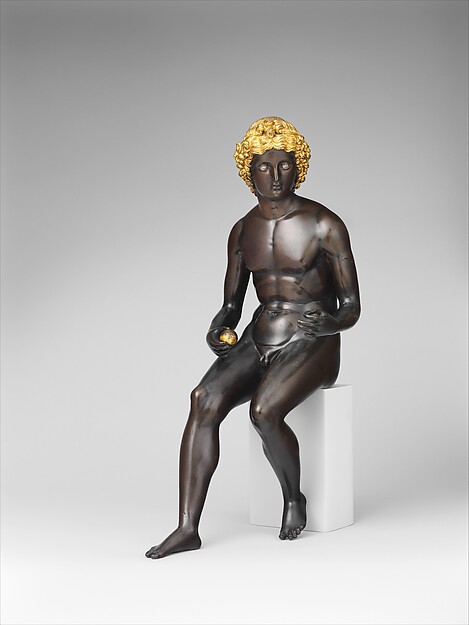
Image title: Paris
Medium: Bronze, partially fire-gilt, silver inlay
Date: ca. 1518–1524
Source:
The Met Collection
“
Few people are capable of expressing with equanimity opinions which differ from the prejudices of their social environment. Most people are even incapable of forming such opinions.
”
— Albert Einstein
#NoFilterRenaissance: How Social Media Revives Classical Techniques
Introduction: The New Old Masters of the Internet
Once reserved for the dimly lit corridors of museums or grand, gilded frames in European salons, the magic of Renaissance artistry has found an unlikely new gallery: your smartphone. Today’s digital creators aren’t just remixing old styles—they’re passionately reviving the mysterious crafts of yore, from the alchemy of egg tempera to the drama of chiaroscuro. Under hashtags like #NoFilterRenaissance, millions encounter breathtaking works that echo the labor and authenticity of the past, re-energized for a digital audience hungry for genuineness in a swipe-to-refresh world.
1. The Renaissance: The Roots of Artistic Innovation
The 15th and 16th centuries in Italy birthed a visual language so profound it still defines mastery today. Artists like Leonardo da Vinci and Michelangelo elevated art to an intellectual and technical pursuit, pioneering breakthroughs in anatomy, perspective, and materials. Techniques like egg tempera—where pigments are suspended in egg yolk—enabled luminous, detailed paintings that have survived the centuries. The painstaking layering and subtle gradation, core features in Botticelli’s works, communicated not just skill but devotion to craft.
The Renaissance also championed chiaroscuro, the dramatic interplay of light and shadow that Caravaggio would refine into bold, almost cinematic scenes. This fostered a philosophical admiration for nature’s complexity and a belief in the artist as a thoughtful interpreter of reality—an idea now returning through a new generation ultra-aware of both artistry and audience.
2. The Loss and Rediscovery of Craft
The industrial revolution and the modernist embrace of novel materials and abstraction briefly cast tradition aside. As chemical-based paints and photography spread, laborious techniques like egg tempera or detailed underdrawings faded. The 20th century’s vanguard rejected the old metrics of mastery, seeking expressive freedom over patient workmanship.
Yet, within this rupture lies the seed of contemporary resurgence. Today’s artists, schooled in both digital instantaneity and an internet awash with content, increasingly crave the satisfaction of tangible skill. The web, initially a force for novelty and speed, becomes ironically the best arena for displaying obsessions with process, evidence of handcraft, and the kind of patiently built imagery that contrasts our rapid-fire timelines.
3. Social Media: The Global Gallery
Enter Instagram, TikTok, and YouTube: platforms that, at first, seemed destined to flatten culture into fleeting trends. Instead, they have paradoxically become sanctuaries for traditional craftsmanship. Time-lapse videos showcase the transformation of humble wood panels into relics that recall the altarpieces of Siena or Florence. Tutorials demystify gilding or the mixology of pigment with egg, captivating millions who are fascinated not just by results, but by method.
What drives this hunger? The craving for authenticity in the digital age is palpable. With filters and quick fixes so effortless, the visible labor of creating a portrait in glazed layers or pulling natural shadows out of smoky backgrounds is itself an act of rebellion. Young creators are not mere consumers but participants in a global guild rediscovering lost skills by sharing, collaborating, and competing online. Classical aesthetics have become a badge of authority, an antidote to digital ephemerality.
4. The Philosophical Return to Meaning
Why do these ancient forms wield such power today? On some level, classical techniques channel something deeper than nostalgia. They represent time, skill, and care—the antithesis of our disposable consumerism. Philosophically, the act of painting with egg tempera or perfecting chiaroscuro becomes a meditation on patience, limits, and attention, mirrored in the mindful consumption and creation promoted by today’s thought leaders.
Furthermore, the Renaissance notion of truth in art resonates powerfully in an age of “fake news” and digital manipulation. Displaying the raw, unvarnished stages of creation under hashtags like #Process or #NoFilter becomes a way of restoring trust and transparency. The same meticulous observation that guided da Vinci’s anatomy studies now drives creators to document their process, inviting audiences into the mystery instead of hiding behind finished facades.
5. Technology as Renaissance Workshop
Ironically, the very tools that once threatened traditional artistry now amplify it. High-resolution cameras and editing software reveal details in brushwork that even a museum visitor might miss. 3D modelling aids composition studies before a single brushstroke is laid down. Online archiving and livestream critique recreate the workshop “bottega” system, enabling mentorship and collaboration across continents.
In this new workshop, knowledge is democratized and even the rarest techniques are teachable. The classical rebirth is not reactionary; it harnesses digital connectivity to foster an unprecedented global guild, more diverse and inclusive than any in art’s long history. This synthesis of ancient wisdom and cutting-edge tech ensures that even as filters multiply, authenticity has become the most coveted quality of all.
Conclusion: The Renaissance, Filtered Anew
The digital age, far from erasing tradition, has given it fresh vigor. As you scroll past an egg tempera Madonna or a chiaroscuro-draped portrait created by an artist continents away, realize you are participating in a continuity of awe, mastery, and meaning. The #NoFilterRenaissance is more than a style; it’s a declaration of substance in a world of surfaces—and a reminder that, whatever the medium, great art always transcends its time.

Useful links: