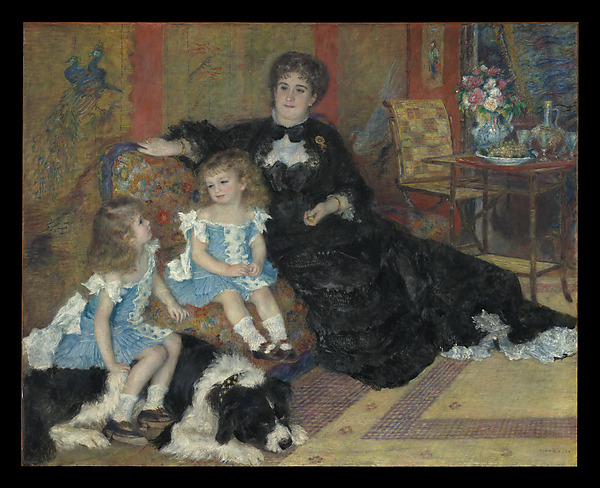
Image title: Madame Georges Charpentier (Marguerite-Louise Lemonnier, 1848–1904) and Her Children, Georgette-Berthe (1872–1945) and Paul-Emile-Charles (1875–1895)
Medium: Oil on canvas
Date: 1878
Source:
The Met Collection
“
It is the supreme art of the teacher to awaken joy in creative expression and knowledge.
”
— Albert Einstein
‘Disposable Beauty’: The Fleeting Artistry of Food as Political Expression
Introduction: The Art of the Edible and the Ephemeral
Throughout history, artists have defied tradition by choosing mediums beyond canvas and stone, yet perhaps no material is as immediate or as perishable as food. In the last half-century, food art has emerged as a dynamic form of expression—one often rooted in political commentary and social critique. The beauty of these works lies in their very impermanence; pies left to rot, sugar sculptures melting into sticky puddles, banquet tables commemorating lost cultures and contested histories. Today, we journey through the history and ingenuity of artists who have chosen to make their statements edible, yet purposefully disposable, using their creations to engage with migration, labor, colonialism, and the urgent matter of climate change.
Feasts of Empire: Food as Material in Historical Art
Before contemporary food art’s distinct rise, food played a symbolic role in historical artworks, notably in still life paintings of the Dutch Golden Age. Grapes, lobsters, and exotic citrus fruits in these images spoke to colonial conquest, global trade, and elite excess—an indirect commentary on labor, value, and power. The feast table itself, in European court life and Spanish bodegónes, was a spectacle of abundance standing in stark contrast to the hunger of the lower classes. While not food art in the modern sense, these tableaus prefigured the edible political works of later centuries, laying a foundation for art where consumption and meaning intertwine.
From Happenings to Happenstance: Food as a Site of Social Critique
The 1960s and 1970s witnessed the birth of “happenings” and performance art, where food migrated from the background to center stage. Artists such as Daniel Spoerri with his “snare pictures” and Meret Oppenheim’s poetic banquets used edible materials to challenge the permanence and exclusivity of art. Spoerri’s works, for example, fixed the remnants of meals—crumbs, stains, bones—preserving fleeting moments and highlighting the dignity of labor performed by invisible hands. Meanwhile, feminist artist Suzanne Lacy’s “International Dinner Party” (1979) used the act of cooking and sharing food to foreground women’s global networks of power and care, simultaneously celebrating and questioning traditional roles.
Edible Provocation: Contemporary Artists Challenging Power and Place
In recent decades, food’s role as a medium has expanded to include urgent dialogues about migration, labor, and climate. Vietnamese-American artist Tiffany Chung has recreated maps of migration routes using edible rice, referencing refugee journeys and geographies shaped by changing climates and political borders. Egyptian artist Ganzeer’s performance “Cairo Cake Map” invited viewers to eat a representation of his home city, consuming layers of history and colonial transformation. Meanwhile, Jamaican artist Ebony G. Patterson uses elaborately laden tablescapes—laden with sweets, fruit, and flowers—to explore the legacies of colonialism and Black life in the Caribbean, transforming the seductive appeal of banquet imagery into a meditation on loss and celebration.
Sugar, Salt, and the Sands of Climate: The Materiality of Disappearance
Food art’s greatest philosophical power may be its temporality. Works by the Brazilian artist Vik Muniz—who rendered famous art historical images from sugar, chocolate, and garbage—exemplify this tension between creation and decay, consumption and remembrance. In the hands of artist Sonya Clark, table salt becomes a fraught material signifying both sustenance and scarcity—commenting on the Atlantic slave trade and environmental disaster in her “Unraveling” and “Salt” installations. Today, as artists like Jorge Menna Barreto create living gardens that will be harvested and consumed, food itself becomes a metaphor for climate change: a fragile, vanishing medium defined by the choices of the present moment.
Conclusion: The Politics of the Edible
Artists who choose food as their medium invite us to witness transformation, decay, and the interplay between necessity and excess. The fleeting nature of their work echoes the gut-level realities of migration, labor, colonialism, and climate—themes far too big, and often too urgent, to be captured in something permanent. In every fleeting feast, we are asked to savor not only taste but meaning—to contemplate that which cannot last, but also, perhaps, cannot be forgotten.

Image description:
File:Pieter Brueghel the Elder – The Dutch Proverbs – Google Art Project.jpg
License:
Public domain
Source:
Wikimedia Commons
Useful links: