
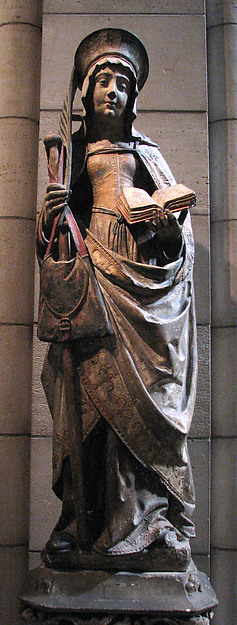
Image title: Saint Savina of Troyes or Saint Syra
Medium: Limestone with paint and gilding
Date: 1510–20
Source: The Met Collection
“
Discipline is the bridge between goals and accomplishment.
”
— Jim Rohn
Beyond Borders: Art as a Bridge Across Mediterranean Civilizations
The Mediterranean Sea has long been a cradle of civilization, where diverse cultures have converged, clashed, and coexisted. Among these, the ancient Greeks, Romans, and Egyptians created extraordinary art that speaks volumes about their societies, beliefs, and interactions with one another. By examining the cross-cultural influences between these civilizations, we gain insight into shared themes and innovative exchanges that shaped the course of art history.
The Dawn of Artistic Exchange: Egyptian and Greek Interactions
Egypt stood as a beacon of monumental art and architecture long before the Greek civilization flourished. Early interactions between Egypt and the Aegean world, particularly the Minoans and Mycenaeans, set the stage for cultural and artistic exchanges. The Greeks adapted and absorbed various elements of Egyptian art, including stylized human forms, symbolic iconography, and the use of proportion and symmetry.
The Greeks, for example, showed tremendous admiration for the Egyptian technique of stone carving, which influenced their approach to sculpture. Kouros figures, early Greek sculptures, echo the rigid and frontal poses of Egyptian statues, suggesting a direct inspiration from Egyptian art. This cross-cultural exchange marked the beginning of a deep and enduring respect for Egyptian artistic achievements within the Greek world.
The Hellenistic Synthesis: Alexander the Great’s Influence
With Alexander the Great’s conquest of Egypt in 332 BCE, a new era of cultural synthesis emerged, known as the Hellenistic period. Alexander’s foundation of the city of Alexandria epitomized the fusion of Greek and Egyptian elements, which fostered a vibrant artistic and intellectual environment.
The Hellenistic influence is evident in the grandiose and eclectic art that flourished during this time. Greek artists began to explore new themes, incorporating elements of drama, realism, and emotional expression. The use of perspective to create depth and the fascination with depicting movement and anatomy, innovations partly inspired by their exposure to Egyptian methodologies, marked a transformation in the artistic narrative.
Roman Reinterpretation: A Cultural Kaleidoscope
The Romans, ever the great assimilators, absorbed the artistic influences of both the Greeks and Egyptians. Roman art showcases an eclectic mix that pays homage to these varied traditions while asserting its unique identity. Rome’s admiration for Greek art resulted in widespread replication of Greek sculptures and the Greek-style mythology’s infusion into Roman culture.
However, the Romans also integrated Egyptian motifs and iconography into their own artistic endeavors, especially during the period when Egypt became part of the Roman Empire. The cult of Isis and other Egyptian deities gained popularity, and Egyptian symbols such as the ankh and the use of obelisks found their presence in Roman art and architecture. This blend illustrated a willingness among artists to explore beyond cultural confines, reflecting a dynamic and globalized artistic landscape.
The Philosophical Underpinnings: Art as a Reflection of Ideals
Art across the Mediterranean also captured the philosophical pursuits and ideals of each civilization. Greek art, known for its celebration of humanism and idealized beauty, depicted heroes, gods, and daily life with an emphasis on proportion and harmony. This approach later influenced the Romans, who used art to glorify their empire, showing emperors and gods in a similarly idealized manner.
The Egyptians, in contrast, created art that served religious and funerary purposes, emphasizing the eternal and divine. The contrast and convergence of these philosophical approaches across visual art invoked a dialogue about humanity, the divine, and the pursuit of understanding life and the afterlife—dialogues that artists in each civilization engaged with through their creations.
Technological and Material Innovations: The Cross-Terrain of Technique
The exchange of artistic materials and techniques was another pivotal aspect of Mediterranean cross-cultural artistry. The Greeks were known for bronze casting, which the Romans adopted extensively. Meanwhile, both Greeks and Romans benefited from Egyptian advancements in stonework and hieroglyphs, taking inspiration from these scripting techniques to embellish their own narratives.
Similarly, the naval prowess of these civilizations allowed the movement of not only goods but also skills and artisanal knowledge across the Mediterranean, further enriching each culture’s creative repertoire. These technological and material exchanges allowed for the development of new styles and methodologies, leaving a legacy of innovation across centuries.
The Mediterranean, through the confluence of these three monumental civilizations, shaped a vibrant and multifaceted artistic legacy. The art that emerged from this melting pot transcended geographical and cultural borders, acting as a bridge that connected varied philosophies and artistic traditions. Through this lens, ancient art is not just a relic of the past but a testament to a shared human story, open to reinterpretation and appreciation.

Image description: The Ancient Mediterranean Art gallery in the European Galleries at the Milwaukee Art Museum in Milwaukee, Wisconsin (United States).
Artist: Michael Barera
Credit: Own work
License: CC BY-SA 4.0
Source: Wikimedia Commons
Useful links: