

Image title: Plaque with equestrian ọ́bà (king) and attendants
Medium: Brass
Date: ca. 1540–70
Source: The Met Collection
“
Creativity comes from trust. Trust your instincts. And never hope more than you work.
”
— Rita Mae Brown
Art Under Fire: The Resilient Creativity During Wartime
Introduction: The Unyielding Spirit of Artistic Expression in War
Throughout history, war has often acted as a crucible for artistic expression, compelling artists to capture the profound complexities of human conflict and resilience. From ancient to modern times, artists have navigated the tumult of war to create works that stand as powerful testaments to survival, defiance, and the indomitable human spirit. This article takes you on a journey through time, exploring how artists have consistently turned the chaos of war into unique canvases of creative expression.
Chapter 1: The Birth of War Art in Antiquity
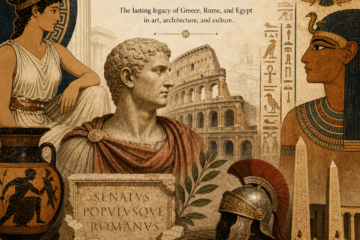
The earliest depictions of war in art can be traced back to ancient civilizations such as Mesopotamia and Egypt, where art served as propaganda and documentarian. The Assyrians, in particular, were known for their detailed bas-reliefs showcasing triumphant armies and subjugated foes, carved meticulously into palace walls. In ancient Greece, the Parthenon Marbles and vase paintings illustrated heroism and glory, often idealizing warriors as larger-than-life figures. These artworks provided a means for societies to assert their dominance and cultural narratives, blending artistic prowess with historical documentation.
Chapter 2: The Renaissance: Rebirth Amidst Conflict
The Renaissance period brought forth a dynamic interplay between art and war, marked by a profound philosophical awakening. Amidst the turmoil of the Italian Wars and the Protestant Reformation, artists like Leonardo da Vinci and Michelangelo simultaneously witnessed and contributed to innovative advancements. Da Vinci, fascinated by the mechanics of war, sketched meticulously designed war machines, merging his artistic genius with his engineering aspirations. Meanwhile, Michelangelo’s art exuded a humanistic perspective, showcasing the fragility of humanity amidst divine and earthly battles, such as evident in his poignant ‘Last Judgment’.
Chapter 3: The Cataclysmic Canvas of the World Wars
The World Wars of the 20th century catalyzed some of the most profound transformations in artistic expression. In the wake of unprecedented devastation, movements such as Dadaism emerged as a form of artistic rebellion, challenging societal norms and questioning the very fabric of a rational world. Artists like Otto Dix translated the grotesque realities of war onto canvas, confronting audiences with stark, brutal truths. Meanwhile, Picasso’s ‘Guernica’ remains one of the most iconic anti-war artworks, capturing the visceral horrors of bombing and the chaos of shattered lives through its haunting monochrome palette.
Chapter 4: Post-War Modernism and Cold War Creativity
The post-war era during the Cold War saw artists employing abstraction to grapple with existential threats like nuclear annihilation. Movements such as Abstract Expressionism, led by figures like Jackson Pollock and Mark Rothko, sought to transcend traditional representations, forging a visceral connection between viewers and the raw intensity of their work. These artworks communicated the anxiety and tension of the Cold War years, employing color and form as a language to reflect global unease amidst geopolitical unrest.
Chapter 5: Contemporary Art in the Age of Global Conflict
In the modern era, artists continue to respond to the challenges of war with innovative creativity. From Ai Weiwei’s installations highlighting human rights issues to the digital art movements that leverage new technologies, today’s artists utilize diverse media to critique power structures and advocate for peace. These contemporary creators harness the power of the globalized digital world to reach mass audiences, transcending borders and fostering dialogues of hope and resilience in the face of ongoing conflicts.
Conclusion: Art’s Eternal Role in Conflict and Resilience
Throughout history, art has played a crucial role in documenting and reacting to the ravages of war. Whether through painting, sculpture, or digital media, artists have conveyed the complexities of warfare and the strength found in human perseverance. As society continues to face new challenges, the resilient creativity of artists remains a beacon of hope, providing an indispensable reminder of our shared humanity amidst turmoil.

Image description: Potential components of green infrastructure
Artist: Directorate-General for Environment, European Commission Note the license information that is given on this related page: https://ec.europa.eu/info/legal-notice_en "Unless otherwise indicated (e.g. in individual copyright notices), content owned by the EU on this website is licensed under the Creative Commons Attribution 4.0 International (CC BY 4.0) licence"
Credit: https://ec.europa.eu/environment/nature/ecosystems/benefits/index_en.htm "The forms and functions of green infrastructure" Directorate-General for Environment, European Commission
License: CC BY-SA 4.0
Source: Wikimedia Commons
Useful links: