
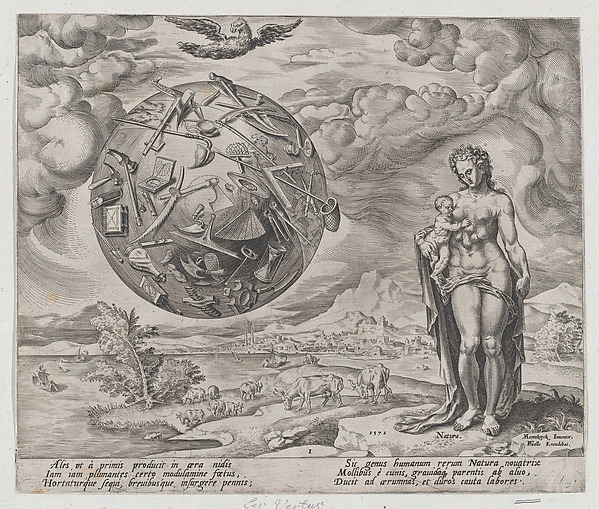
Image title: Man Born to Toil, from The Reward of Labour and Diligence, plate 1
Medium: Engraving, second state of four (New Hollstein)
Date: 1572
Source: The Met Collection
“
From wonder into wonder existence opens.
”
— Laozi
Visualizing Philosophy: Explorations of Existence in Art
Introduction: Art as a Philosophical Mirror
Throughout history, art has transcended mere aesthetic pleasure to serve as a profound medium for exploring and visualizing the rich tapestry of human thought and existential inquiry. Artists like René Magritte and Giorgio de Chirico have been at the forefront of this exploration, using their canvases to pose complex questions about reality and existence. This blog post delves into how these artists, among others, have depicted metaphysical concepts in art.
Early 20th Century: The Birth of Metaphysical Art
The early 20th century was a time of significant philosophical and artistic transformation. Italian artist Giorgio de Chirico introduced the metaphysical painting style, characterized by eerie cityscapes, elongated shadows, and classical architecture, often infused with enigmatic symbols. De Chirico offered a visual exploration of Nietzchean and Heideggerian themes of existential dread and the search for meaning. The ambiguity and dreamlike quality of de Chirico’s work invite viewers to ponder the nature of reality and their place within it.
Surrealism: Magritte and the Subversion of Reality
Surrealism, with its roots deeply embedded in Freudian philosophy, sought to unlock the mysteries of the subconscious. Among its most distinguished proponents was René Magritte, whose playful yet thought-provoking images continue to challenge perceptions of reality. For Magritte, mundane objects like apples and pipes transcended their everyday meanings, becoming tools for philosophical inquiry. His famous works, like ‘The Treachery of Images,’ compel viewers to confront the deceptiveness of perceptions and the fluidity of meaning.
Mid-20th Century: Artists Embrace Existentialism
The post-war era heralded a new wave of existential thought, with artists drawing from the writings of Sartre, Camus, and others. This period saw a surge in art that grappled with human isolation, freedom, and responsibility. Abstract expressionists like Jackson Pollock captured the chaos and spontaneity of existence through their dynamic compositions, while narrative-driven artists like Edward Hopper depicted the stark solitude of modern life with haunting clarity.
Late 20th to 21st Century: Technological and Conceptual Innovations
As technology advanced, so too did the methods artists used to explore philosophical themes. Digital art and interactive installations have become fertile ground for philosophical inquiry. Contemporary artists such as Olafur Eliasson and Anish Kapoor have utilized space, light, and viewer interaction to probe reality’s structure. These innovations prompt audiences to reconsider their perceptions and engage with art on a multisensory level, making the philosophical pursuit not just a visual experience but a holistic one.
Conclusion: The Unending Dialogue
Art remains an ever-evolving dialogue between the visual and the philosophical. Artists like Magritte and de Chirico paved the way for new generations to examine humanity’s most profound questions through visual narratives. As we continue to face existential challenges and question the essence of existence and reality, art remains a crucial mirror reflecting and shaping our understanding of the world.

Image description: A fundamental essay on the Metaphysical school Art movement Italy
Artist: Potassio23
Credit: Own work
License: CC0
Source: Wikimedia Commons
Useful links: