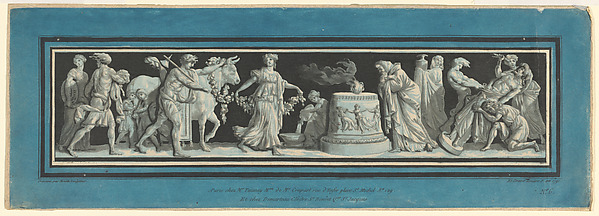
Image title: Antique Scene, Sacrifice with Bacchantes, Ancient Sculpture
Medium: Aquatint, etching, and crayon manner engraving with blue printed border
Date: 1791
Source: The Met Collection
“
The older I get the more wisdom I find in the ancient rule of taking first things first. A process which often reduces the most complex human problem to a manageable proportion.
”
— Dwight D. Eisenhower
The Silent Revolution: Women Sculptors of Ancient Rome
Introduction: A Forgotten Legacy
In the vast, marble-strewn halls of history, the ancient Roman Empire is often celebrated for its monumental contributions to architecture, governance, and art. However, amid the echoing applause for emperors and generals, the voices of women, particularly those who sculpted in stone and clay, have often been lost. This blog delves into the fascinating narrative of female sculptors in Ancient Rome, whose silent revolutions helped shape the art world in ways that are only now being fully appreciated.
The Early Sculptors: Unveiling an Era
In the early years of the Roman Empire, art was a reflection of social hierarchy and religious devotion, often created by male artisans commissioned by the state’s elite. However, as the Republic transitioned to the Empire, archaeological evidence suggests the presence and work of female sculptors, though largely undocumented by name. These women often hailed from artistic families or were former slaves who acquired skills from their masters. Their sculptures, primarily in private collections, began to challenge the prevailing norms of gender in art creation.
Art in Daily Life: Reimagining the Domestic Sphere
Unlike their male counterparts, women sculptors frequently focused on themes within the domestic sphere, capturing the intimacy of familial ties through busts and relief work that adorned private homes. These artworks not only showcased technical prowess but also subtly redefined the status of household art as objects of cultural and emotional significance. By utilizing materials such as terra cotta and bronze, women managed to innovate within the limits imposed by societal roles.
The Philosophical Underpinnings: Change from Within
Roman philosophy, heavily influenced by Greek thought, espoused ideals that occasionally allowed progressive interpretations regarding women’s roles. Stoicism, for instance, with its emphasis on inner virtue over outer appearances, provided a philosophical framework that could justify women’s participation in the arts. Female sculptors embraced this paradigm, often reflecting stoic ideals in their works that celebrated calm, reason, and harmony, transcending the turbulent political landscapes.
Technological Influences: Innovating Creativity
Technological advances in the Roman era, including improved tools and sculpting techniques passed down from Greek innovations, were integral to the evolution of sculpture. Women sculptors, keen observers and adapters of these technological shifts, began using chisels, calipers, and compasses, allowing them to produce intricate details previously unavailable in smaller scales. One of the greatest feats was their ability to infuse subtle realism and delicate expressions that documented personal stories and societal narratives through their art.
Legacy and Rediscovery: A New Understanding
The contributions of women in Roman sculpting began to fade along with the empire’s decline, with many works attributed to anonymous artists. However, recent archaeological expeditions and scholarly research have started to unearth these masterpieces, inviting a new wave of appreciation and academic interest. Today, as these sculptures resurface in museums and collections worldwide, we are reminded of the innovative spirit these women possessed, a testament to their enduring influence.
The story of women sculptors in ancient Rome is not just about reclaiming a lost narrative but about gaining insight into the complexities of cultural evolutions that continue to influence contemporary art paradigms. As we rediscover these silent revolutionaries, they remind us that art is not just a reflection of our world but an ever-changing dialogue with it, driven collectively yet powerfully by those who dared to carve their own space.

Useful links: