
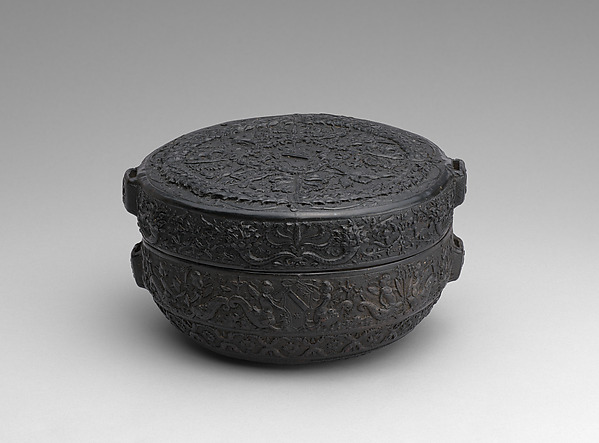
Image title: Leather box
Medium: Incised, tooled and stamped leather (cuir bouilli)
Date: ca. 1490
Source: The Met Collection
“
It is in your moments of decision that your destiny is shaped.
”
— Tony Robbins
The Alchemy of Paints: How Chemistry Shaped Renaissance Art
The Renaissance, a blossoming era of art, science, and humanism from the 14th to the 17th century, marked a transformative period in history. At the heart of this transformation was the fusion of art and science, nowhere more apparent than in the alchemy of paint. Through chemistry, artists like Leonardo da Vinci unlocked new dimensions of color and technique, rendering their work with unprecedented realism.
Chapter 1: The Dawn of Pigment Discovery
Long before the Renaissance, artists relied on natural pigments derived from minerals, plants, and even insects. Ultramarine, a precious blue made from lapis lazuli, was reserved for only the most sacred subjects due to its cost. The extensive trade and exploration during the Renaissance introduced European artists to new pigments, like the rich red vermilion from cinnabar and green malachite. The quest for vibrant and stable colors paralleled the period’s pursuit of knowledge, fueled by advancements in chemistry.
Chapter 2: Leonardo da Vinci and Linseed Oil
One cannot delve into the chemistry of Renaissance art without focusing on Leonardo da Vinci. His multifaceted genius extended to exploring oil as a medium. Previously, egg tempera was the primary binding medium for pigments, but it limited color vibrancy and drying time. Da Vinci’s use of linseed oil, with its slower drying time, gave him the flexibility to layer paints, creating more depth and lifelike realism in his subjects. This technique, though simple in its idea, revolutionized the control artists had over their medium.
Chapter 3: Alchemy in Service of the Arts
During the Renaissance, alchemy—seen as an early form of chemistry—played a significant role in paint development. Alchemists of the time sought not only the Philosopher’s Stone but also ways to create and improve upon colors. As they experimented with metals and minerals, discoveries such as Naples yellow, a lead antimonate, emerged. These new colors provided artists with a broader palette to express the visible world in stunning clarity.
Chapter 4: The Philosophical Influence of Humanism
The Renaissance was not just an era of artistic experimentation but also of deep philosophical change. Humanism, with its emphasis on observation and empirical evidence, encouraged artists to observe nature closely and reflect this in their work. The accurate portrayal of light, anatomy, and perspective was not only a technical challenge but also a philosophical endeavor. With chemistry enabling the creation of more durable and vibrant paints, artists could more faithfully render their observations, blurring the line between art and reality.
Chapter 5: Legacy and Influence on Modern Techniques
The chemical innovations of the Renaissance have left an indelible mark on art. This period laid the groundwork for modern artistry, with pigments and techniques continuing to evolve alongside scientific progress. The integration of chemistry into art provided the tools needed for movements such as Impressionism, which further explored color and light. Even today, art conservation heavily relies on chemical knowledge to preserve the masterpieces birthed from this pivotal era.
The alchemy of paints during the Renaissance demonstrates how intertwined art and science can lead to monumental leaps in human achievement. It served as a precursor to the interdisciplinary collaborations of modern times, proving that when the visual brilliance of art meets the analytical rigors of science, the results can captivate the world for centuries.

Image description: I, the copyright holder of this work, hereby publish it under the following license:
Artist: Vadim Cole
Credit: Own work
License: CC BY-SA 4.0
Source: Wikimedia Commons
Useful links: