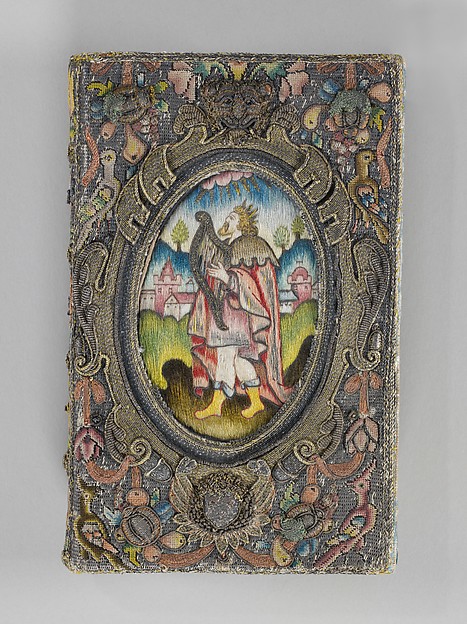
Image title: The New Testament, The Book of Common Prayer
Medium: Silk, bullion, silver, and silver-gilt thread on canvas and satin
Date: ca. 1636
Source:
The Met Collection
“
What is necessary to change a person is to change his awareness of himself.
”
— Abraham Maslow
Textile Rebellions: Artisans of Change
Introduction: Weaving the Threads of Protest
Throughout history, textile art has been more than a mere craft; it has served as a powerful medium for political expression, cultural commentary, and social transformation. From the intricate tapestries of medieval Europe to the vibrant fabric arts led by contemporary rebels, textiles have woven narratives of identity, resistance, and change. This rich tradition of crafting dissent speaks through diverse threads, uniting the personal with the political in a legacy that both challenges and inspires.
The Tapestries of Power: Medieval Symbols of Authority and Rebellion
During the medieval period, textiles played a dual role as symbols of power and tools of rebellion. Tapestries, in particular, were used both to legitimize authority and to critique it. The Bayeux Tapestry, with its ambitious narrative depicting the Norman conquest of England, serves as a prime example of textile art carrying an intricate political story. Meanwhile, tapestries depicting biblical stories and moral allegories subtly questioned and subverted the societal norms dictated by the church and state, weaving rebellion into their moral fabric.
Colonial Threads: Quilts of Resistance and Cultural Resilience
The era of colonization saw textiles emerge as emblematic of both oppression and resilience. In Africa and Asia, indigenous textile patterns became symbols of cultural identity and resistance against colonial rule. Closer to the United States, African American quilts such as those produced by the enslaved and their descendants offered coded messages and quilts served as maps for the Underground Railroad. These patchworks were not only functional art pieces but also powerful statements of defiance and hope, weaving stories of survival and resistance.
Feminist Fabrics: The 20th Century Struggle for Equality
The feminist movements of the 20th century found a potent ally in textile art. Activists appropriated techniques traditionally dismissed as ‘women’s work’ to produce art that challenged gender stereotypes and advocated for equality. Judy Chicago’s iconic installation, ‘The Dinner Party’, with its vast embroidered table settings, honored the contributions of historically marginalized women. During this era, artists began to openly question and redefine notions of femininity, using textiles to craft bold, albeit delicate, responses to patriarchal society.
Contemporary Rebels: Fabric Art in the Digital Age
In today’s digital world, textile art has gained renewed relevance as artists address modern socio-political issues such as climate change, globalization, and human rights. Artists like Anni Albers, whose textiles challenged the Bauhaus norms, blend technological innovation with traditional craftsmanship, exploring synthetic dyes and digital printing. Contemporary textile art collects threads from around the world, weaving them into visceral statements about collective action, environmental stewardship, and global solidarity.
Conclusion: The Endless Thread of Change
Textile arts have long stood at the intersection of craft and politics, offering a unique vantage point from which to examine social change. As contemporary artists continue to embrace this potent medium, fabric art’s impact grows ever more profound, weaving new stories of rebellion, resilience, and hope. The woven threads of the past and the present form an unbroken line of inspiration, a reminder that art’s softest medium can wield the sharpest edge.

Image description:
“Published by the Newark Museum Association during the exhibition of New Jersey textiles held in the public library building Feb. 1 to March 18, 1916, for the use of students and teachers.”
Subjects: Textile fabrics
License:
Public domain
Source:
Wikimedia Commons
Useful links: