
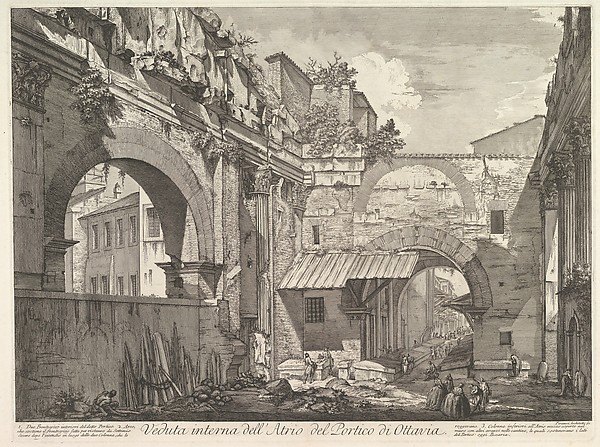
Image title: Veduta interna dell'Atrio del Portico di Ottavia (Internal View of the Atrium of the Portico of Octavia), in: 'Vedute di Roma' (Views of Rome)
Medium: Etching
Date: 1760
Source: The Met Collection
“
The art challenges the technology, and the technology inspires the art.
”
— John Lasseter
Dystopian Dreams: Urban Decay and Contemporary Street Art
Introduction: The Concrete Canvas
In the post-industrial urban landscape, street art emerges as a vibrant form of expression reflecting societal tensions and aspirations. Across decaying city walls, artists paint the dystopian dreams and resilient spirit of societies grappling with modern challenges. This blog explores how street art dialogues with themes of urban decay, offering profound insights into contemporary cultural and social dynamics.
Chapter 1: Rise of Street Art amid Industrial Decline
The decline of global industrial hubs in the late 20th century left behind a legacy of abandonment. Factories stood empty, and infrastructure crumbled, creating breeding grounds for street art. The barren, unused spaces became canvases for artists who saw potential in decay. Inspired by graffiti pioneers from the Bronx in the 1970s, a new wave of artists began symbolically reclaiming urban environments. By turning desolate spaces into colorful expressions, they revitalized public interest in neglected areas, marking the beginning of street art as a poignant socio-cultural movement.
Chapter 2: Societal Reflections in Urban Decay
Artists like Banksy and Blu have made profound statements on social issues by using urban decay as a backdrop. Their works often critique consumerism, social inequality, and political turmoil. For example, Banksy’s pieces frequently juxtapose playful imagery with harsh realities, such as children wielding balloons amidst ruins, highlighting innocence against a backdrop of despair. This visual commentary taps into a universal unease felt amidst failing public systems and environmental degradation, showing how decay serves as both subject and medium.
Chapter 3: Philosophical Insights and Metaphors
Embedded within street art are philosophical undertones exploring existential themes. Artists employ urban decay to symbolize impermanence and transformation, encouraging communities to reflect on their transient surroundings. As decay progresses, street art fades, juxtaposing the ephemeral nature of human constructs with the enduring passage of time. This dialogue between art and environment invites philosophical exploration of themes such as entropy and rebirth, sparking conversations about the future of urban life.
Chapter 4: Artistic Techniques and Technological Evolution
Technological advancements have transformed street art from simple spray paint graffiti to intricate installations and digital projections. Techniques now incorporate augmented reality and drone technology, allowing complex interactions with decayed urban spaces. By utilizing such innovations, artists push traditional boundaries, turning cities into interactive art spaces that engage and immerse audiences. This technological integration highlights the evolving dialogue between modernity and decay, where the old meets the new in artistic expression.
Chapter 5: Resilience and Community Revival
Street art rooted in urban decay also embodies themes of resilience and renewal. In cities like Detroit, artistic collectives have transformed abandoned buildings into cultural hotspots, spurring community initiatives and economic rejuvenation. These projects demonstrate the power of art in fostering resilience, turning decay into a catalyst for communal growth. Artists challenge viewers to see beauty and potential amid desolation, inspiring grassroots movements that redefine urban landscapes.
Conclusion: Urban Decay as a Catalyst for Change
Street art thrives in imperfect environments, using decay not as an endpoint but a canvas for dialogue and transformation. Urban decay informs a unique narrative that blends despair with hope, highlighting societal challenges while celebrating human creativity and resilience. As cities evolve, street art will continue to reflect these changing landscapes, challenging individuals to confront and reshape the environments they inhabit.

Image description: Urban Decay logo
Artist: L'Oréal
Credit: loreal.com
License: Public domain
Source: Wikimedia Commons
Useful links: