Algorithmic Muses: Can AI Dream Like Dali?

Introduction: The Surrealist Threshold From melting clocks to dreamscapes of impossible geometries, surrealism has long invited viewers to suspend the logic of the waking world in favor of the unconscious and fantastical. Now, as artificial intelligence generates strikingly bizarre images at the click of a button, the question arises: can machines truly produce surrealist art in the spirit of Salvador Dalí, Max Ernst, or Leonora Carrington? Or are they merely adept mimicry engines, stitching together Read more…
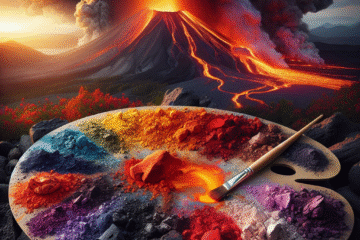
When Volcanoes Paint: Pigments Born from Geologic Catastrophe

Introduction: Earth’s Fiery Palette The creative force of nature has long inspired human expression, but few elements have played as paradoxical a role in art as volcanoes. Both destroyers and givers, volcanoes have left behind not only reshaped landscapes but also pigments that have made their way into frescoes, canvases, and ceramics across millennia. From the ashen slopes of Vesuvius to the mineral-rich soil of Iceland, geologic catastrophes have birthed vivid colors that helped define Read more…

The Shadow Painters: Political Exiles Who Changed Art in Secret

Introduction: Art in the Time of Fear Throughout the 20th century, authoritarian regimes across the globe sought to silence dissident voices. Yet while guns and laws could suppress speech, the visual language of art proved far more elusive. In countries like Francoist Spain and Pinochet’s Chile, artists were forced underground, exiled from institutions, and denied public platforms. But instead of silence, they turned to subtlety—embedding messages in symbols, layering visual metaphors, and constructing entire artistic Read more…

The Mold Breakers: Ceramics as Anti-Elitist Fine Art from Grayson Perry to Magdalene Odundo

Introduction: Smashing the Pedestal For decades, ceramics have simmered on the fringes of the fine art world, often relegated to craft fairs and domestic shelves rather than white-walled galleries. Yet in recent years, visionary artists have reclaimed clay as a site of radical expression, dismantling elitist hierarchies and redefining what fine art can be. From Grayson Perry’s subversive vases to Magdalene Odundo’s serene yet politically potent forms, ceramics have become a medium for cultural agency, Read more…

‘Paint Me As I Please’: Self-Portraiture by Women Who Defied Convention

Introduction: More Than a Mirror From the early days of art history, self-portraiture has been a means for artists to assert their presence, but for women, the self-portrait was—and remains—a revolutionary act. When society offered them narrow roles and limited visibility, a canvas became a stage for renegotiating identity, power, and autonomy. This article journeys through time to uncover women who used self-portraiture not just to depict themselves but to challenge conventions, redefine femininity, and Read more…

‘I Paint Therefore I Am’: Phenomenology and the Self in Abstract Expressionism

Introduction: Painting the Self into Being The iconic phrase “I think therefore I am” by René Descartes forms the skeleton of Western notions of identity and consciousness. But for Abstract Expressionists such as Joan Mitchell and Franz Kline, thought was not enough—only through the act of painting could one truly be. This existential approach finds a resonant echo in phenomenology, the philosophical movement that emphasizes lived experience, perception, and bodily being-in-the-world. In this article, we Read more…

From Cave Walls to Code: A Brief History of Art’s Evolution

Introduction Humanity’s relationship with art is as ancient as our ability to think abstractly and dream beyond survival. Over tens of thousands of years, visual art has transformed with technology, culture, and philosophy—moving from primitive cave paintings to digital masterpieces created by artificial intelligence. Each era marks a pivotal change, not only in technique and medium but in how we understand ourselves and the world around us. This article traces those transformative epochs, offering a Read more…

The Bauhaus Legacy: Streamlining the Modern World

Introduction: A Revolution in Form and Function The Bauhaus was more than a design school—it was a radical movement that reshaped the visual language of the 20th century. Founded in 1919 in Weimar, Germany, by architect Walter Gropius, the Bauhaus emerged at a time when European society was grappling with the aftermath of the First World War. The school’s mission was clear: to reunite art and craft in the service of a new, industrialized society. Read more…

Velázquez and the Mirror: Power and Illusion in ‘Las Meninas’

Introduction: The Puzzle of the Spanish Court Diego Velázquez’s 1656 masterpiece, Las Meninas, is often described as a visual enigma—a profound meditation on perception, authorship, and hierarchical power hidden within the canvas of a royal portrait. Created during Spain’s Golden Age, the painting transcends any traditional label of ‘portrait’ or ‘genre scene’; instead, it occupies a shifting threshold where viewer and subject trade places, where mirrors reflect more than light, and where illusion becomes a Read more…

Fresco & Awakening: The Renaissance Ceiling as Political Metaphor

Introduction: Architecture of the Divine and Earthly Power When one tilts their head to gaze upon the Sistine Chapel ceiling, they are not merely admiring a masterpiece of religious art—they are entering a potent visual dialogue between theology, humanism, and political authority. During the Renaissance, frescos painted on ceilings became more than decorative artistry; they were immersive cosmologies that symbolized the convergence of divine order and earthly rule. Michelangelo’s famed frescoes do more than illustrate Read more…