Beyond the Frame: Installation Art and the Fourth Dimension

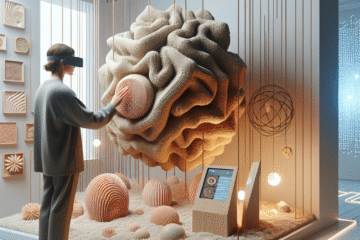
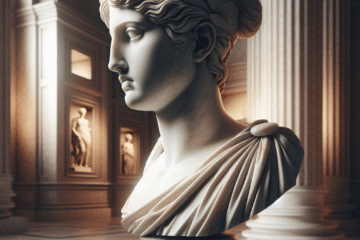
Introduction: Redefining the Work of Art For centuries, visual art was predominantly an exercise in framing—a painting on a wall, a sculpture on a pedestal, an image fixed in time and space, inviting contemplation but keeping the viewer at a respectful distance. The rise of installation art shattered these boundaries. Emerging in the 20th century and evolving rapidly into the 21st, installation art immerses viewers into environments that blur the line between object and observer. Read more…

The Global Baroque: Beyond Europe

Introduction: The Baroque as a Global Language of Power and Devotion When we hear the word “Baroque,” visions of gilded churches, theatrical paintings by Caravaggio, and ornate palaces from Versailles to Vienna often come to mind. Originating in late 16th-century Europe, the Baroque style was characterized by emotion, dynamism, and grandeur. It was a powerful aesthetic vehicle for religious fervor and absolute monarchy—making visible the invisible forces of divine and earthly power. But beyond its Read more…

From Botticelli to the Birth of Venus: Renaissance Art’s Love Affair with Mythology

I. Introduction Hook: The allure of Renaissance art is an enchanting journey into a world where mythology intertwines with artistic genius, giving birth to timeless masterpieces that continue to captivate audiences to this day. With their unparalleled skill and unbridled imagination, Renaissance artists embarked on a quest to revive the stories of ancient Greek and Roman mythology, breathing new life into these age-old tales. Brief explanation of the Renaissance era and its artistic characteristics: The Read more…

The Art of Color: Techniques and Principles of Color Theory

I. Introduction Color is a powerful tool that artists have been using for centuries to evoke emotions, create moods, and express their ideas. Color theory is the study of how colors interact with each other and how they can be combined to create pleasing compositions. It is a fundamental aspect of art and design that has been studied and refined for centuries. Color theory is essential in art because it allows artists to understand the Read more…

The Legacy of Salvador Dali: How He Changed the Art World Forever

I. Introduction Salvador Dali is widely regarded as one of the most influential and innovative artists of the 20th century. Born in Figueres, Catalonia, Spain in 1904, Dali quickly gained fame for his surrealist paintings, which pushed the boundaries of traditional art and challenged viewers to question their perceptions of reality. Over the course of his career, Dali produced a wide range of works in various mediums, including painting, sculpture, and film. The impact of Read more…

The Revolutionary Style of Cubism: Breaking Down Reality

I. Introduction A. Explanation of Cubism and its significance Cubism was an influential and revolutionary art movement that emerged in the early 20th century. It is characterized by the breaking down of reality into geometric shapes, use of multiple perspectives and viewpoints, and a monochromatic color palette. Cubism challenged traditional notions of representation and perspective in art and opened up new avenues for artistic expression. Cubism was a major turning point in the history of Read more…

Painting in a Post-Pandemic World: Reflections on Art and Healing

I. Introduction The COVID-19 pandemic has had a profound impact on society, affecting virtually every aspect of daily life. From economic disruptions and changes in work and school routines to the tragic loss of life, the pandemic has left a lasting impression on the global community. Beyond the immediate physical health effects, the pandemic has also had a significant impact on mental health. As individuals have faced unprecedented challenges and stressors, many have turned to Read more…

Leonardo da Vinci: The Ultimate Renaissance Man

I. Introduction Leonardo da Vinci was an Italian polymath of the Renaissance period, born on April 15, 1452, in the town of Vinci, in the Tuscan region of Italy. He is widely regarded as one of the most talented and versatile individuals in history, with his accomplishments ranging from art and sculpture to science, engineering, and philosophy. A. Brief biography of Leonardo da Vinci Leonardo was born to a prominent family, but he was an Read more…

Georgia O’Keeffe: A Pioneer of American Modernism

I. Introduction Georgia O’Keeffe was an American artist who is best known for her paintings of enlarged flowers, New York skyscrapers, and New Mexico landscapes. She was born on November 15, 1887, in Sun Prairie, Wisconsin, and grew up in a farming family. From an early age, she showed an interest in art and eventually pursued it as a career. O’Keeffe’s career began in the early 1900s when she attended the Art Institute of Chicago Read more…

Exploring the World of Abstract Painting

I. Introduction Abstract painting is a unique form of visual art that does not attempt to represent the natural world realistically. Instead, it focuses on the use of color, shape, form, and texture to create compositions that express emotions, ideas, or concepts. While abstract painting can be traced back to ancient cultures like the Aboriginal art of Australia, it became a significant movement in the 20th century. The birth of abstract painting as an art Read more…