
“
Peace begins with a smile.
”
— Mother Teresa
Mona Lisa Revisited: The Enigmatic Smile Through AI’s Lens
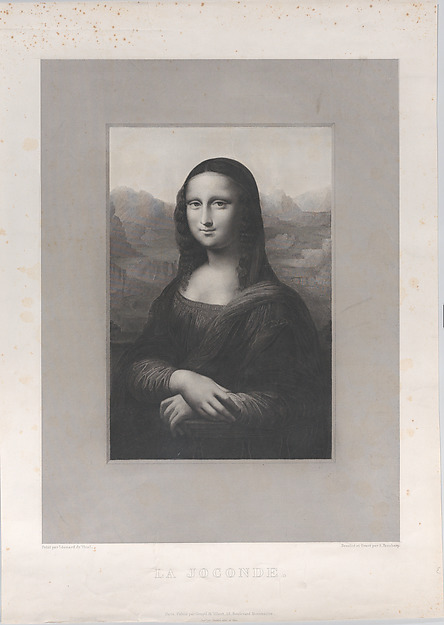
Mona Lisa, Leonardo da Vinci’s masterpiece, has intrigued audiences for centuries with her elusive smile and captivating gaze. While historians, artists, and critics have long sought to understand her enigma, today’s cutting-edge technology offers a fresh perspective. Through the lens of artificial intelligence, we revisit the Mona Lisa, unveiling new interpretations that blend art, technology, and philosophy in fascinating ways.
Chapter 1: A Timeless Enigma in Renaissance Splendor
The Renaissance was a period of rebirth, a time when art, science, and philosophy flourished under the patronage of the elite. Leonardo’s Mona Lisa epitomizes the era’s artistic innovation with her chiaroscuro and sfumato techniques. The painting has been analyzed for the psychological complexity of its subject and its innovative portrayal of the background landscape. Yet, her subtle smile remains a key point of intrigue, symbolizing the inward focus and serenity that define the Renaissance humanist ideals. AI technologies offer the chance to dissect these aesthetic choices in unprecedented detail.
Chapter 2: Technological Advances in Art Analysis
Modern AI-powered tools have begun to emulate, in digital form, the meticulous eye of the Renaissance artisan. Equipped with pattern recognition algorithms, AI analyzes compositions, brushstrokes, and color schemes with precision, unveiling aspects imperceptible to the human eye. By examining the Mona Lisa, AI systems can detect digital patterns, revealing variations in Mona Lisa’s skin tones and the overall palette that human observers might not perceive. This technological advancement adds layers to our understanding of Leonardo’s painting techniques and his unrivaled mastery.
Chapter 3: The Philosophical Implications of Machine Perception
Artificial intelligence analyzing a work of art raises philosophical questions about perception, interpretation, and creativity. AI doesn’t respond emotionally or subjectively; it identifies empirical patterns and data points. However, these analyses could shift our perceptions, questioning the boundaries between human creativity and machine analysis—challenging our notions of understanding and appreciating art. It might imply a future where the definition of art appreciation is as much about data as it is about subjective experience.
Chapter 4: Revealing Hidden Layers
In exploring the depths of Mona Lisa, AI has unearthed findings that were previously hidden beneath layers of paint and varnish. Infrared and ultraviolet analyses augmented by AI can speculate on overpainting and amendments that reveal Leonardo’s iterative process. These discoveries illuminate the practice of da Vinci and Renaissance art-making, providing insight into the evolution of this iconic portrait over time. With this, AI not only deciphers art’s visual language but also its historical narrative.
Chapter 5: Cultural Reflections and Future Interpretations
The collaboration of AI and art extends beyond mere analysis—it also sheds light on our contemporary cultural landscape. As technology integrates more deeply into art, the Mona Lisa’s reinterpretation through AI showcases our perpetual quest for knowledge and understanding. In future artistic endeavors, AI could evolve from an analytical tool to a creative collaborator, transforming how we create and perceive art. Indeed, as we reimagine the Mona Lisa, AI brings us closer to understanding both the pat historical layers and the unfolding future of visual arts.

Image description: File:Mona Lisa, by Leonardo da Vinci, from C2RMF retouched.jpg
Artist: Leonardo da Vinci
Credit: Cropped and relevelled from File:Mona Lisa, by Leonardo da Vinci, from C2RMF.jpg. Originally C2RMF: Galerie de tableaux en très haute définition: image page
License: Public domain
Source: Wikimedia Commons
Useful links: