
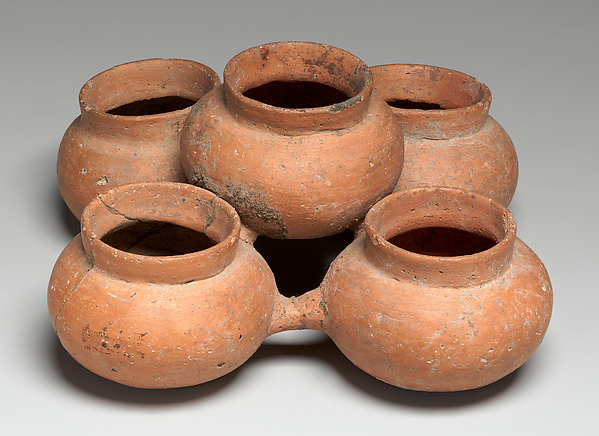
Image title: Grouped pigment jars
Medium: Ceramic, pigment
Date: 300–800 CE
Source: The Met Collection
“
The universe is made of stories, not atoms.
”
— Muriel Rukeyser
Through the Lens of Time: Forgotten Indigenous Sculptures and Their Stories
Indigenous sculptures have long served as transmitters of cultural narratives, standing as silent witnesses to civilizations that have often been marginalized in mainstream history. These sculptures speak volumes through their forms and shapes, assisting in piecing together the rich tapestry of indigenous cultural identity. From the intricate to the monumental, these artworks offer insights into spiritual beliefs, social hierarchies, and technological prowess across eras and continents.
1. The Dawn of Creation: Ancient Beginnings
The journey of sculptural art begins in the cradle of civilization. Indigenous sculptures, often overlooked in the grand narratives of art history, encapsulate the essence of ancient societies. In Africa, the Nok civilization is renowned for creating terracotta sculptures as early as 1000 BCE. These figures, often depicting human and animal forms, are believed to have religious or ritualistic significance. Similarly, in the Americas, the Olmec heads of Mesoamerica are colossal stone representations of leaders or deities, reflecting the Olmec civilization’s complex societal structure.
2. Expressions of Power: The Rise of Empires
As societies evolved, the role of sculpture grew beyond religious depiction to embody power and authority. In Oceania, the Maori of New Zealand carved intricate totems and figurines to assert tribal identity and lineage. These artworks not only represented spiritual beliefs but also marked territorial claims. In Southeast Asia, the Khmer Empire’s Angkor Wat is adorned with bas-reliefs that illustrate Hindu epics, showcasing a profound synthesis of religion and state power.
3. Spiritual and Symbolic: The Mystical Pathways
Indigenous sculptures also serve as conduits to the spiritual realm. In Aboriginal Australian culture, the carved ‘Pukumani Poles’ mark grave sites, symbolizing the transition of spirits. In North America, the totem poles of the indigenous tribes in the Pacific Northwest narrate stories of kinship and mythological beings. These symbols were not mere art; they were extensions of spiritual beliefs deeply ingrained in community consciousness.
4. The Colonial Encounter: Resilience and Resistance
The arrival of colonial powers disrupted indigenous practices, often resulting in the suppression or alteration of cultural expressions. However, indigenous art was also a powerful form of resistance. The woodcarving traditions of the Yoruba in Nigeria, despite colonial pressures, continued to flourish, adapting European elements while maintaining intrinsic indigenous aesthetics and meanings. Similarly, the art of the Inuit people, highlighted by sculptures of marine life and ancestral spirits, embodies resilience against cultural erosion.
5. The Contemporary Revival: Tradition and Transformation
Today, indigenous sculptors are bridging tradition with contemporary expression, invoking a renaissance in cultural pride. Artists like Emily Kame Kngwarreye of the Anmatyerre community in Australia combine traditional themes with modern mediums. In North America, contemporary Native American artists incorporate traditional motifs into new forms, demonstrating a vibrant reclamation of identity. This revival is a testament to the enduring legacy and adaptive spirit of indigenous sculpture, inviting renewed interest and appreciation from global audiences.
Indigenous sculptures, often secluded in their cultural specificity, hold universal lessons and beauty. As we continue to challenge the Eurocentric focus of global art history, these artworks remind us of the diversity and depth of human creativity and its intrinsic tie to culture and community identity.

Image description: Large indigenous Taiwanese woodwork sculpture in Hualien.
Artist: Blervis
Credit: Own work
License: CC0
Source: Wikimedia Commons
Useful links: