

Image title: Landscape; a small island with two trees surrounded by water on the left; a tree by a cottage on the right
Medium: Pen and brown ink on paper set into blue paper mat
Date: ca. 1793–94
Source: The Met Collection
“
Age does not protect you from love. But love, to some extent, protects you from age.
”
— Anaïs Nin
From Canvas to Code: Exploring Digital Surrealism in the Age of Algorithms
Introduction: Blurring the Boundaries
The digital age has redefined countless aspects of contemporary life, drastically reshaping industries and art forms alike. Among these transformations, a captivating artistic movement known as digital surrealism has emerged, forging a new realm of creative expression by blending traditional surrealist techniques with advanced algorithms. As digital surrealism continues to grow, it offers artists an unprecedented toolkit for challenging perceptions of reality. This article delves into the evolution of digital surrealism, exploring its roots, influences, and implications.
The Dawn of Surrealism: Painting a New Reality
Surrealism began in the early 20th century as a revolutionary artistic movement that looked beyond the constraints of reality. Founded by André Breton in 1924, surrealism sought to reconcile the worlds of pure imagination and the unconscious mind with the tangible world. Artists like Salvador Dalí, René Magritte, and Max Ernst captivated audiences with their dreamlike works, employing techniques like juxtaposition, dislocation, and fantastical imagery. The movement was deeply intertwined with the psychoanalytical theories of Sigmund Freud, who explored the dynamics of the subconscious—an exploration mirrored vividly by surrealist art.
Into the Digital Realm: Tools of Transformation
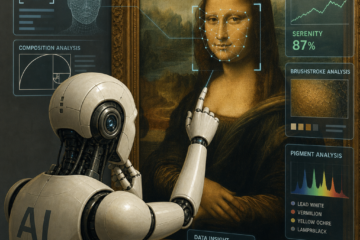
The digital age brought profound shifts in the tools available to artists. Graphic software like Photoshop, 3D modeling programs, and, more recently, AI-driven platforms enable the creation of intricate, otherworldly digital works. These tools are particularly conducive to surrealism due to their ability to manipulate reality effortlessly. Digitally-enabled artists manipulate space and form in ways even the most daring surrealists of the past could only dream of, crafting images with layers of complexity that evoke vivid reactions in viewers.
Algorithms Meet Artistry: A New Frontier
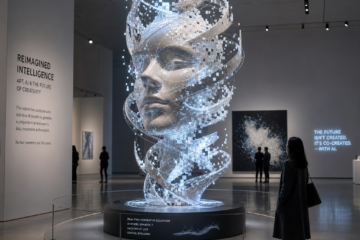
Central to digital surrealism’s evolution is the role of algorithms in generating art. Artists like Refik Anadol and Mario Klingemann are pioneers leveraging machine learning techniques to produce captivating digital installations and imagery. Algorithms can process vast quantities of data and identify previously unseen patterns, offering artists novel textures, forms, and aesthetics. This fusion of human creativity with algorithmic precision provides surprising elements of randomness and discovery, core tenets of surrealism that push the boundaries of imagination.
Cultural Reflections: A Mirror to Modern Society
Digital surrealism doesn’t exist in isolation; it’s interwoven with the sociocultural fabric of its time. In today’s world, where reality is often mediated through screens and digital experiences, digital surrealism provides a medium to critique and reflect on our altered perceptions of reality. It challenges the audience to question what they see, fostering philosophical exploration about authenticity, existentialism, and consciousness. As digital artists continue to probe these themes, their creations echo the sentiments and struggles of modern existence.
The Future of Digital Surrealism: Uncharted Possibilities
As technology continues to evolve, so will the possibilities within digital surrealism. Emerging technologies like virtual reality (VR) and augmented reality (AR) promise to expand the capabilities of artists even further, allowing them to immerse audiences in fully interactive surreal environments. These developments indicate a horizon where traditional physical art forms and digital innovations are not in opposition but rather enhance the human experience of art in new and profound ways.
Conclusion: The Intersection of Innovation and Imagination
Digital surrealism stands at the fascinating intersection of innovation and imagination, where age-old artistic techniques meet cutting-edge technology. By examining the movement through its various transformations, we gain insight into the ever-evolving dialogue between art and technology. As digital surrealism continues to develop, it holds the potential to reshape not just our understanding of art but our comprehension of reality itself. This journey from canvas to code is an ongoing narrative, inviting all to explore the wondrous possibilities of created worlds.

Image description: Surrealism 2022 Death Valley by David S. Soriano.
Artist: David S. Soriano
Credit: Own work
License: CC BY-SA 4.0
Source: Wikimedia Commons
Useful links: