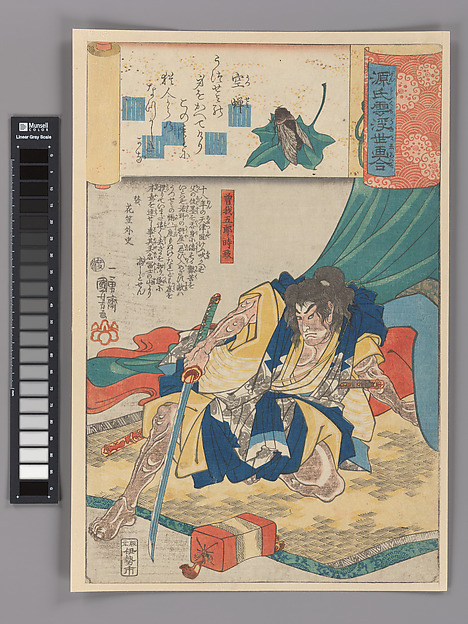
Image title: “‘A Molted Cicada Shell’ (Utsusemi): Soga Gorō Tokimune,” from the series Scenes amid Genji Clouds Matched with Ukiyo-e Pictures (Genji-gumo ukiyo e-awase)
Medium: Woodblock ōban print (nishiki-e); ink and color on paper
Date: ca. 1845–61
Source: The Met Collection
“
Be slow of tongue and quick of eye.
”
— Miguel de Cervantes
Cultural Cross-Pollination: The Interwoven Legacy of Ukiyo-e and Impressionism
Introduction: A Bridge Between Worlds
In the grand tapestry of art history, there are moments when cultures collide and inspire, forging new paths and redefining artistic possibilities. The encounter between Japanese Ukiyo-e prints and Western Impressionism stands as a stunning example of this cross-cultural fertilization. This article explores how the fluid lines and vivid colors of Ukiyo-e left an indelible imprint on the Impressionist movement, reshaping the global art narrative in the process.
The Rise of Ukiyo-e: Japan’s Artistic Blossom
Ukiyo-e, or ‘pictures of the floating world,’ flourished during Japan’s Edo period (1603-1868). Rooted in the bustling urban culture of cities like Edo (now Tokyo), these woodblock prints captured the transient pleasures of life—kabuki actors, courtesans, and serene landscapes. Masters like Hokusai and Hiroshige pushed the boundaries of color, perspective, and subject matter, all of which laid the groundwork for a visual revolution. This vibrant art form remained largely insular until the mid-19th century, when Japan opened its ports to the West, inadvertently setting the stage for global artistic upheaval.
Western Encounters: The Opening of Japan
Japan’s self-imposed isolation came to an end with the arrival of Commodore Matthew Perry in 1853, which initiated trade with Western countries. The ensuing inflow of Japanese goods, including Ukiyo-e prints, into Europe sparked a fascination with Japanese art and culture known as Japonisme. Ukiyo-e’s unique aesthetics—flat planes of color, compositional asymmetry, and an intimate focus on everyday life—offered a fresh perspective that diverged from Western traditions of linear perspective and gradual shading.
Impressionists Inspired: The Fresh Winds of Japonisme
The embrace of Japanese aesthetics by the Impressionists marked a pivotal moment in art history. Western artists like Claude Monet, Edgar Degas, and Vincent van Gogh eagerly collected Ukiyo-e prints, drawing inspiration from their bold lines and color contrasts. Monet’s series of paintings, such as his ‘La Japonaise,’ reveal an overt fascination with Japanese themes, while Degas’s work incorporated the snapshot-like qualities of Ukiyo-e’s composition. This blend of Eastern and Western styles forged a new visual language, which became a hallmark of the Impressionist movement.
An Artistic Dialog: Legacy and Transformation
The fusion of Japanese art and Western Impressionism opened doors for further cross-cultural exchanges in the following decades. Post-Impressionists like Paul Gauguin and Henri de Toulouse-Lautrec absorbed and re-interpreted these influences, paving the way for modern art. This exchange encouraged a global dialogue, showing how art transcends borders and time. By challenging conventional representation, the confluence of Ukiyo-e and Impressionism contributed significantly to the evolution of abstract and conceptual art movements in the 20th century.
Conclusion: A New Horizon in Art
Ukiyo-e’s impact on Western Impressionism not only transformed the European art landscape but also heralded a new era of global artistic exchanges. Today, the legacy of this cross-cultural pollination continues to resonate, reminding us of the perpetual rhythm of influence and adaptation that propels artistic innovation. As artists and audiences, we remain part of an ongoing narrative, witnessing the timeless power of cultural collaboration.

Image description:
Oniji Ōtani III (aka. Nakazō Nakamura II) as Edobee in the May 1794 production of Koi Nyōbo Somewake Tazuna at Edo Kawarasaki-za theater.Polychrome woodcut print on paper; 15 x 9 7/8 in. (38.1 x 22.9 cm)
Henry L. Phillips Collection, Bequest of Henry L. Phillips, 1939 (JP2822)
License:
Public domain
Source:
Wikimedia Commons
Useful links: