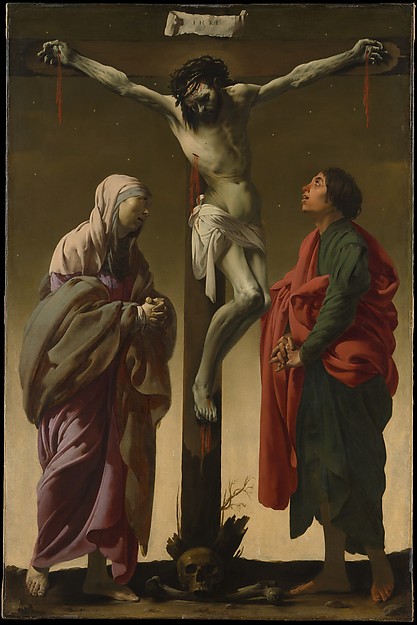
Image title: The Crucifixion with the Virgin and Saint John
Medium: Oil on canvas
Date: ca. 1624–25
Source:
The Met Collection
“
Sports do not build character. They reveal it.
”
— Heywood Broun
Ultraviolet Saints: What Hidden Layers in Medieval Paintings Reveal
Introduction: Shedding New Light on Old Masters
For centuries, medieval paintings have captivated viewers with their rich symbolism, vibrant colors, and spiritual gravitas. But thanks to modern imaging technologies like ultraviolet (UV) fluorescence, infrared reflectography, and X-radiography, scholars and conservators are discovering entire hidden dimensions beneath these timeless works. These invisible layers—concealed by varnish, overpainting, or simply time—are now returning to view, revealing forgotten saints, altered compositions, and even glimpses into the artist’s original intentions. In this blog post, we journey through five pivotal stages in the history of art where looking beneath the surface has transformed our understanding of the past.
1. Shadows of the Divine: The Medieval Era and Hidden Iconography
Many Gothic and early medieval paintings were not just images of devotion but complex spiritual tools for contemplation. What modern UV analysis has revealed is that these paintings often underwent significant changes—sometimes during their creation, and other times centuries later. Saints appear and disappear. Halos shift. Colors darken or are replaced. In altarpieces, UV light frequently exposes inscriptions once thought lost, often underscoring the sacred geometry and textual richness of medieval theology. For instance, in a 14th-century panel attributed to the Master of Flemalle, UV light revealed the ghostly outline of an archangel—painted and then covered up before the final version was completed. Such discoveries shed light not just on artistic processes but also on liturgical and doctrinal revisions over time.
2. Renaissance Corrections: When Genius Rewrote Itself
The Renaissance introduced linear perspective, human anatomy, and a renewed emphasis on individuality in art. With these changes came a greater willingness to revise. UV and infrared imaging of Leonardo da Vinci’s paintings, such as the “Adoration of the Magi,” have revealed numerous pentimenti—alterations made by the artist during the painting process. These insights show that even the most celebrated masters were constantly experimenting. In Botticelli’s “Primavera,” hidden underlayers suggest changes in the arrangement of figures, hinting at evolving thematic intentions or patron demands. UV technology doesn’t just uncover mistakes; it reveals the restless creativity of art in transition.
3. Baroque Miracles: Revealing the Theatrical Nature of Light
The Baroque period was centered around drama, light, and movement. Artists like Caravaggio and Rembrandt used chiaroscuro—strong contrasts of light and shadow—to evoke emotion and divine intensity. Interestingly, UV imaging has revealed how these masters sometimes pushed pigments beyond their time’s technological limits. Some of Rembrandt’s works display areas where different varnishes or glazes were applied to enhance luminosity, with UV light making the distinctions strikingly clear. Restorations informed by this data allow us to experience these paintings more closely to how 17th-century viewers did—immersed in their brilliant interplay of light and shadow.
4. Romantic Revelations: Emotion and Hidden Messages
The Romantic era, with its deep focus on emotional authenticity and individual expression, also saw more layering and sometimes secret messaging in paintings. UV analysis of works by artists like Francisco Goya or Eugène Delacroix highlights how symbolic elements were initially integrated into compositions yet painted over in response to political climates or personal conflicts. A fascinating case is Goya’s “The Third of May 1808,” where UV technology has shown ghostly battlefield imagery beneath the finished composition, possibly early drafts or symbols later deemed too controversial for public display. These hidden layers encode the tensions of a time when art was both a mirror and a battleground of ideals.
5. Digital Illuminations: The Technological Renaissance of Art History
Today, the intersection of digital technology and classical art has opened unprecedented avenues for research. Sophisticated UV scanning, multispectral imaging, and AI-powered restoration tools are creating ‘virtual unpeelings’ of old masterpieces. Projects like the Prado Museum’s spectral analysis of El Greco or MIT’s visualization of palimpsests push the boundaries of what we can learn from these ancient surfaces. Such breakthroughs compel us to ask philosophical questions: At what layer does ‘truth’ reside in art? Is the original sketch more authentic than the final varnished version? In many ways, these tools don’t just reveal the past—they reorder it, challenging our narrative of singular artistic vision and inviting a more nuanced understanding of artistic labor.
Conclusion: Seeing with New Eyes
The rise of ultraviolet and spectral imaging has dramatically reshaped the field of art history. Through it, we uncover not only pigments and preparatory sketches, but the intellectual, spiritual, and emotional lives behind the masterpieces. Hidden saints, redrawn angels, modified skylines, and forgotten prayers—all rise to the surface, insisting on renewed attention. These discoveries don’t diminish the magic of medieval and Renaissance art; they deepen it. For every layer we uncover, another mystery remains. The saints, it turns out, have always been with us—quietly glowing in ultraviolet light.

Image description:
A female model being body painted with fluorescent colours under ultraviolet light, photographed at the World Bodypainting Festival 2016 in Pörtschach am Wörthersee, Carinthia, Austria.
License:
CC BY-SA 4.0
Source:
Wikimedia Commons
Useful links: