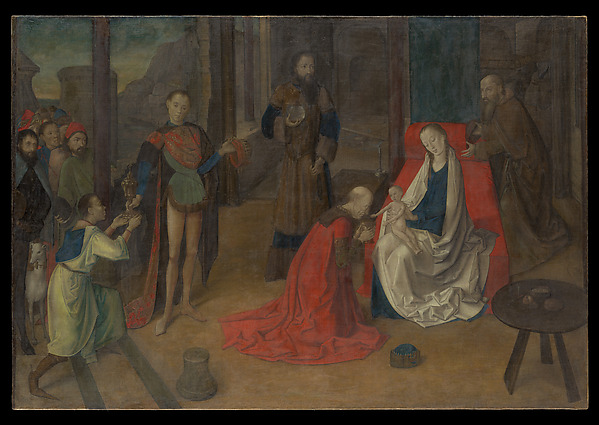
Image title: The Adoration of the Magi
Medium: Distemper on canvas
Date: 1472–74
Source:
The Met Collection
“
The energy of the mind is the essence of life.
”
— Aristotle
The Graphic Revolutionaries of Zimbabwe’s Post-Independence Posters
Introduction: Ink, Independence, and Identity
In the heady days following Zimbabwe’s independence from British colonial rule in 1980, a wave of vivid, defiant poster art swept across the newly-liberated nation. These bold visual statements, created by a generation of young, energetic printmakers, evolved into tools of cultural reclamation and political education. More than ephemeral announcements, these posters marked a visual revolution—one that declared the power of African identity in ink, color, and paper.
This post traces the evolution of Zimbabwe’s poster art in the 1980s, a time when aesthetics and ideology merged to redefine the role of visual art in a nation undergoing a tectonic transformation. From the workshops of Harare to the teaching presses of Mzilikazi Art Center, the work of these graphic revolutionaries is a compelling chapter in the global history of postcolonial art.
1. Post-Independence Euphoria and the Birth of a New Aesthetic
The year 1980 was not merely a political transition for Zimbabwe; it was a cultural rebirth. After almost a century of colonial oppression, the newly sovereign state was hungry for self-definition. This was fertile ground for a new visual culture. In urban centers, artists turned to poster-making as a means of communicating with citizens still largely cut off from mainstream media. The Zimbabwean government and NGOs supported this explosion of print culture, using posters to spread messaging around health, voting, and national unity.
Technologically, the rise of affordable silkscreening methods made mass production viable. Aesthetically, the posters blended bold, graphic forms with motifs inspired by traditional Shona sculpture and matriarchal iconography, mixing modernist design principles with indigenous sensibilities.
2. The Rise of the Workshop Movement
Much of the artistic energy of this era coalesced in communal art spaces. Institutions like the Mzilikazi Art Center in Bulawayo and the National Gallery in Harare became epicenters of poster creation. These workshops were not just training grounds—they were ideological laboratories. Influenced by pan-Africanist thought, Marxist theory, and liberation theology, artists gathered to hash out what it meant to be Zimbabwean in a freshly decolonized world.
Workshops emphasized democratic production models: artists often collaborated on themes, and posters were signed collectively. This model emphasized the tribal and community structures that colonialism tried to dissolve. The technology of the silkscreen—a medium requiring teamwork, rhythm, and repetition—reflected a collective spirit antithetical to Western ideals of individual authorship.
3. Art as a Tool of Education and Resistance
Poster art in Zimbabwe’s 1980s wasn’t neutral decoration—it was an instrument of education. With literacy still developing, visual media became a powerful way to spread information. Topics included HIV/AIDS awareness, voting rights, and land redistribution, often rendered in bold, legible imagery with minimal text. The posters were put up in schools, markets, and rural clinics.
This visual culture was also inherently resistant. Even as Zimbabwe celebrated its independence, internal conflicts and governmental repression surfaced. Artists responded with veiled critiques and subversive symbolism. Color choices, character stylizations, and compositional arrangements conveyed meanings that went unnoticed by censors but landed powerfully with the people. One poster might depict a maladjusted scarecrow with a military cap—a quiet protest against the youth militias terrorizing rural communities.
4. Philosophical and Cultural Currents
At the heart of Zimbabwe’s poster revolution was a powerful philosophical inquiry: how can a society construct its own visual lexicon after decades of visual colonization? The answer came in reasserting indigenous epistemologies. Artists drew inspiration from ancestral patterns, Shona cosmology, and oral storytelling traditions. This decolonial aesthetic wasn’t regressive; it wove ancient wisdom into contemporary struggles.
Moreover, the poster movement was nourished by solidarity with other liberation cultures: Chilean resistance graphics, African-American Black Power imagery, and Cuban revolutionary posters found their way into visual studies in Zimbabwe, creating a hybridized international style rooted in resistance and affirmation.
5. Legacy and Contemporary Resonance
Though the poster boom of the 1980s eventually waned due to economic challenges and shifts in media consumption, its legacy endures. Contemporary Zimbabwean artists like Kudzanai Chiurai and Portia Zvavahera draw from this visual lineage, combining digital tools with the boldness of past poster aesthetics to tackle issues ranging from gender identity to political repression.
Today, archives and international exhibitions are rediscovering and showcasing Zimbabwe’s graphic revolutionaries. The posters stand as historical documents and works of art, embodiments of a time when ink and paper carried an entire people’s hopes, critiques, and dreams toward a future they were creating, line by silkscreened line.
Conclusion: A Revolution in Print
The poster art of 1980s Zimbabwe is a testament to art’s capacity to engage, empower, and transform. Against the backdrop of political upheaval and cultural rebirth, a group of young artists turned the humble poster into a beacon of identity and resistance. Their work reminds us that revolutions aren’t only fought with guns—they’re fought with images, with ink, and with imagination.

Image description:
Zimbabwe Delimitation Report 2022-23
License:
Public domain
Source:
Wikimedia Commons
Useful links: