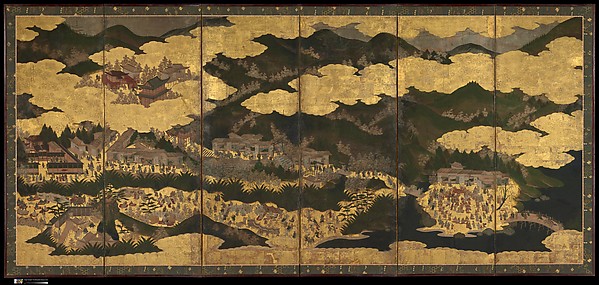
Image title: Cherry Blossom Viewing at Itsukushima and Yoshino
Medium: Pair of six-panel folding screens; ink, color, and gold leaf on paper
Date: first half 17th century
Source:
The Met Collection
“
I never considered a difference of opinion in politics, in religion, in philosophy, as cause for withdrawing from a friend.
”
— Thomas Jefferson
Ink Empire: The Visual Politics of Japanese Edo Tattoo Culture
Introduction: Beneath the Surface of the Floating World
In the heart of Edo-period Japan (1603–1868), beneath layers of silk kimono and beyond the reach of polite society, unfurled an intricate universe inked onto human skin. Tattoos — or horimono — emerged as powerful symbols of identity, rebellion, craftsmanship, and the consequences of social marginalization. Far from being mere decoration, these works of art participated in a subterranean dialogue between aesthetics and authority, pain and pride. This article delves into the complex interplay between criminality, class, and culture that shaped the visual world of Edo’s tattoo underground.
Chapter 1: The Early Roots of Japanese Ink
The genesis of tattooing in Japan predates the Edo era, with archaeological evidence suggesting that the Jōmon people (around 10,000 BCE) ornamented their skin with patterns for ritual and social status. Over time, these primordial marks evolved from spiritual emblems into punishments. During the early Edo period, Japan’s centralized shogunate sought order and control; tattooing was weaponized as a tool of shame. Criminals were often visibly marked with permanent symbols — lines on the forehead or arms — effectively branding them as outcasts. But stigma would soon give way to subversion.
Chapter 2: The Ukiyo-e Influence – Art in the Age of Popular Prints
The rise of ukiyo-e — woodblock prints depicting the “floating world” of pleasure districts, kabuki actors, and legends — gave rise to a distinctive tattoo vernacular. Artists like Utagawa Kuniyoshi and Katsushika Hokusai created vivid depictions of folklore heroes such as the 108 warriors of the Chinese epic “Suikoden,” their bodies adorned with fierce dragons, carp, and mythological beasts. These fantastical images leapt off the page and onto the bodies of firemen, laborers, and low-ranking samurai who commissioned full-back designs (irezumi) echoing the heroic motifs. Tattoo culture flourished underground, a direct challenge to the feudal aesthetic of restraint.
Chapter 3: Ink and Identity – The World of the Machi-Yakko and Working Class
By the mid-Edo period, tattooing had become closely associated with the machi-yakko — chivalrous folk heroes likened to Robin Hood, who protected commoners from corrupt officials. These figures, though often outlawed, were idolized by the urban populace. Tattoos became emblems of honor, stamina, and defiance rather than shame. The tradition also took root among firefighters and construction workers, who wore elaborate body suits symbolizing bravery and brotherhood. The act of being tattooed — enduring the pain and time required for hand-carved designs — itself became a rite of passage in a world that recognized neither comfort nor conformity.
Chapter 4: Technology and Technique – The Artistry of Horishi
The rise of horimono coincided with the development of tebori, a hand-poking technique involving sharp tools and pigments derived from natural ingredients like sumi ink. Master tattooists (horishi) developed an astonishing degree of skill, creating complex, colored designs that mirrored the fine lines and dynamic shading of ukiyo-e prints. The relationship between artist and client often spanned years, with tattoos encompassing the entire back, sleeves, and even legs. This dedication fostered an elite craftsmanship — akin to the artisan guilds of Europe — where lineage, reputation, and secrecy were vital to the tradition’s survival in a society that increasingly surveilled and censored its fringes.
Chapter 5: Censorship and Survival – Tattoo Culture on the Margins
In the late Edo period, as the Tokugawa regime began cementing its moral authority, tattooing found itself criminalized yet again. Formal prohibitions emerged, pushing the practice deeper underground. And yet, paradoxically, this only intensified its allure. Tattoo culture became an aesthetic of defiance — a visual poetry resisting the grey conformity of status-obsessed society. In modern Japan, the legacy continues to reverberate. Though often linked to the yakuza in popular imagination, contemporary tattoo artists have reclaimed Edo’s legacy, combining traditional motifs with global influences in a continuing counter-narrative to authority and convention.
Conclusion: The Lasting Mark of Edo Ink
Edo-period tattoos were more than body art — they were a medium of resistance and storytelling, of pain turned into beauty. They exposed the tensions at the heart of Japanese society: between law and legend, orthodoxy and invention. Even as tattoos remain stigmatized in some corners, they endure as living artifacts of philosophical inquiry, cultural resilience, and visual bravery. In every needle’s prick, the Empire of Ink lives on.
Useful links: