
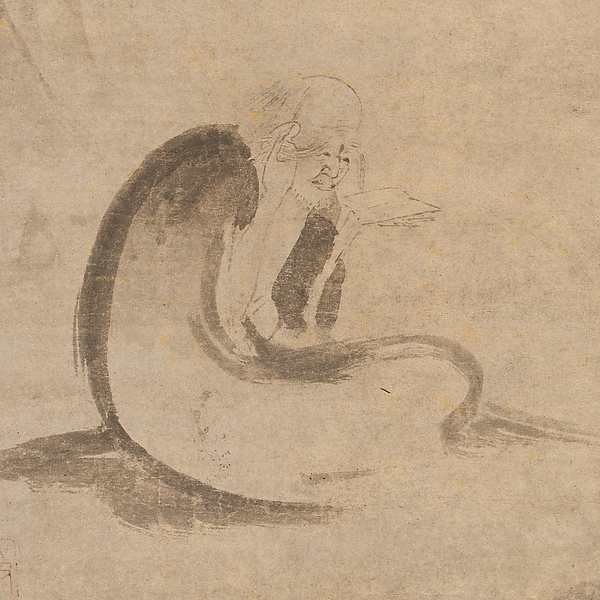
Image title: Reading a sutra by moonlight
Medium: Hanging scroll; ink on paper
Date: ca. 1332
Source: The Met Collection
“
One's friends are that part of the human race with which one can be human.
”
— George Santayana
Brush with Aging: Artistic Explorations of Human Growth Across Cultures
Introduction: Art and the Journey of Life’s Chapters
Art has been a medium through which humans express their deepest emotions, cultural values, and philosophies. Among these rich tapestries of expression, the portrayal of aging – the inevitable march through life’s stages – stands out as a narrative woven with as much diversity as the cultures from which it arises. This exploration of human growth is not merely a reflection of physiological changes, but is imbued with complex layers of cultural significance, philosophical musings, and an evolving sense of beauty. Let us delve into how different cultures have historically painted the narratives of aging, comparing perceptions of maturity, wisdom, and beauty across time and space.
Chapter 1: Ancient Echoes – Wisdom and Reverence
In ancient civilizations, such as Egypt and Greece, the portrayal of aging was closely tied to wisdom and reverence rather than the aesthetic ideals of youth. Egyptian art, with its stylized and symbolic representations, often depicted elders with dignified expressions, marking them as fonts of knowledge within the community. On the other hand, Greek art took on a more naturalistic approach. Through sculptures like the bearded philosophers or the wise Socrates, aging was portrayed as a noble progression towards the zenith of wisdom and intellectual prowess. These artistic interpretations highlight the then-prevalent belief in the virtues of experience over the brashness of youth.
Chapter 2: The Renaissance and Enlightenment – Aging with Grace
The Renaissance brought a revitalized interest in humanism and individual potential. Artists such as Leonardo da Vinci and Michelangelo captured the human form with unparalleled realism, reflecting a balanced appreciation for all ages. In this period, older figures were often depicted with a serene solemnity, blending the ideals of beauty with the passage of time, as seen in da Vinci’s detailed portraiture. Enlightenment thinkers went further, encapsulating the philosophy that human potential grows in sync with the gained wisdom of age, a sentiment captured vividly through art.
Chapter 3: Eastern Perspectives – Harmony and Continuity
Meanwhile, in Eastern cultures, the depiction of aging in art carries its own distinctive notes. Chinese and Japanese art, for example, often emphasize the harmony between nature and the aging individual. Traditional Chinese paintings, with their subtle brushwork, frequently portray elderly figures as wise sages, deeply integrated into the landscape. In Japanese ukiyo-e prints, the fleeting beauty of cherry blossoms parallels the transience of life, appreciating aging as a natural progression within the cycle of life, further enriched by centuries of Buddhist influence.
Chapter 4: Modernity and the Quest for Eternal Youth
The advent of modernity brought with it a shift in cultural attitudes toward aging, increasingly influenced by technological advances and changing social dynamics. The early 20th century saw a preoccupation with youth and vigor, spurred in part by technological innovations and the rapid pace of life. Yet, amidst this backdrop, artists like Pablo Picasso explored themes of aging through abstract representation, challenging conventional notion of beauty and the essence of human vitality. This period marks a turning point where the art of aging begins to reflect societal anxieties as well as personal introspections about time and impermanence.
Chapter 5: Contemporary Dialogues – Diversity in Aging
Today’s art scene is varied and global, embracing diverse perspectives on aging. Contemporary artists tackle topics of diversity, identity, and representation. For instance, the work of Cindy Sherman and Kehinde Wiley interrogates traditional narratives around age, using portraits to address contemporary issues of race, gender, and societal roles. In a world progressively more concerned with inclusivity, contemporary art invites viewers to consider aging not just as a personal journey, but as a cultural dialogue that bridges past, present, and future.
Conclusion: Bridging Cultures Through the Lens of Time
Art’s exploration of aging is both a mirror and a teacher, reflecting diverse cultural attitudes while offering insights into human continuity. From ancient reverence and Renaissance grace to modern and contemporary complexities, each era reveals a distinct narrative, encouraging us to view aging not as decline, but as a transformative process enriched by cultural values and human experiences. As societies continue to evolve, so too does the art that portrays our journey through time, inviting us to embrace aging with open eyes and open hearts.

Image description: File:Jēkabs Kazaks – Three Old Ladies – Google Art Project.jpg
Artist:
Jēkabs Kazaks (1895 – 1920) – Creator (Latvian) Details on Google Art Project
Credit: lQFiF6ncmU47OA at Google Cultural Institute maximum zoom level
License: Public domain
Source: Wikimedia Commons
Useful links: