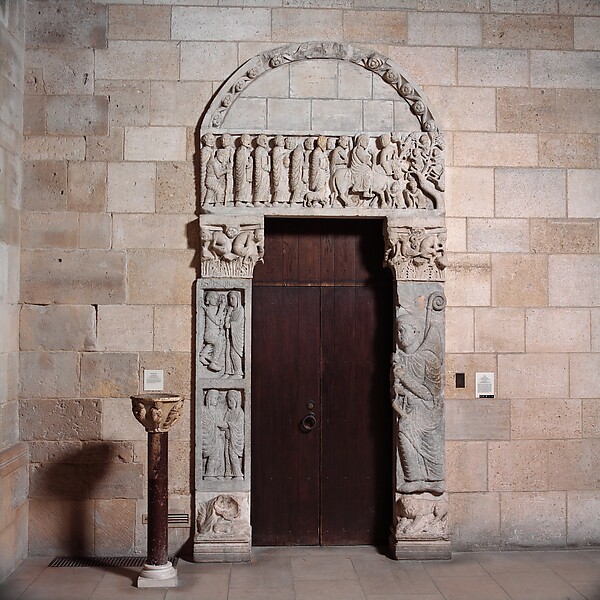
Image title: Portal from the Church of San Leonardo al Frigido
Medium: Marble (Carrara marble)
Date: ca. 1175
Source:
The Met Collection
“
Trust only movement. Life happens at the level of events, not of words. Trust movement.
”
— Alfred Adler
Behind Bars & Easels: The Global Movement of Prison Art Collectives
Introduction: Creativity in Confinement
In the most unlikely of places—behind layers of steel bars and concrete walls—a transformative art movement is unfolding. Prison art collectives are emerging as powerful platforms of expression, resilience, and socio-political commentary. These collectives harness the talent of incarcerated individuals, showcasing visual work that defies the constraints of their limited space. From sketches on napkins to large-scale murals within prison courtyards, this movement is broadening our understanding of creativity and the human condition. What does it mean to create from captivity? And how does this art resonate beyond the prison gates?
Chapter 1: Early Seeds – Art in Captivity Through the Ages
The connection between incarceration and artistic creation is not new. Historical records show political prisoners as early as ancient Rome and medieval Europe etching drawings on cell walls as acts of resistance or contemplation. In the 19th century, dissidents and revolutionaries, such as those locked in Siberian labor camps, often turned to drawing and poetry to sustain their inner world. These primitive visuals were less about formal training and more about survival—using art to maintain identity and dignity under dehumanizing conditions.
Chapter 2: Penal Realism – Mid-20th Century and the Rise of Artistic Awareness
The mid-20th century witnessed a pivotal turn. In the United States, the Civil Rights Movement and rising conversations about prison reform gave rise to a new aesthetic: penal realism. The Vietnam War era saw prisoners expressing radical political thought through muralism and portraiture. Inmates at institutions like San Quentin began to produce work that reflected not just their personal anguish, but also systemic issues—racism, poverty, and justice. This coincided with educational programs in prisons expanding to include art therapy and studio arts, further nurturing creative exploration.
Chapter 3: Global Reach – Prison Art as an International Language
Today, the prison art movement is undeniably global. In South Africa, art programs initiated during apartheid continue to empower inmates in rebuilding narratives of redemption. In Colombia, the ‘Libres Artistas’ group offers female prisoners a creative outlet to challenge traditional gender roles and social stigma. Meanwhile, in the United Kingdom, the Koestler Arts charity has been instrumental in showcasing incarcerated talent through annual exhibitions, reshaping the public’s perception of prison life and those within it.
Chapter 4: Philosophical Dimensions – Freedom Through Creation
Philosophers from Michel Foucault to bell hooks have discussed the intersection of punishment and expression. Art made in prison can be read as both a rebellion against systemic silencing and an invitation into the artist’s interior world. This is art without commerce or institutional approval, giving it an urgency and authenticity that is often missing from gallery-centered work. It forces the viewer to confront trauma, redemption, and the possibility of transformation. In such spaces, creating becomes a pathway to reclaim agency and voice—an act of personal freedom within physical confinement.
Chapter 5: The Digital Turn – Technology and External Engagement
While incarceration often implies a digital disconnect, technology is beginning to influence prison art narratives. Nonprofit organizations now digitize inmate artwork and present it via online galleries, allowing for broader exposure. Programs like The Prison Arts Collective in California blend in-person instruction with virtual artist talks, bridging the gap between prisons and the larger art world. Furthermore, blockchain technology has been suggested as a future method for incarcerated artists to securely store and sell their creations, offering new economic possibilities post-release.
Conclusion: Beyond the Walls
The rise of prison art collectives underscores a deeper truth: human expression cannot be shackled. These artworks, born from restricted spaces, continue to challenge societal assumptions and elevate voices from the margins. As more attention is given to the global prison art movement, the conversation stretches beyond aesthetics—as these pieces testify to pain, resilience, and ultimately, hope. Through brushes, pencils, and scraps of canvas, incarcerated artists are transforming the meaning of both art and freedom.
Useful links: