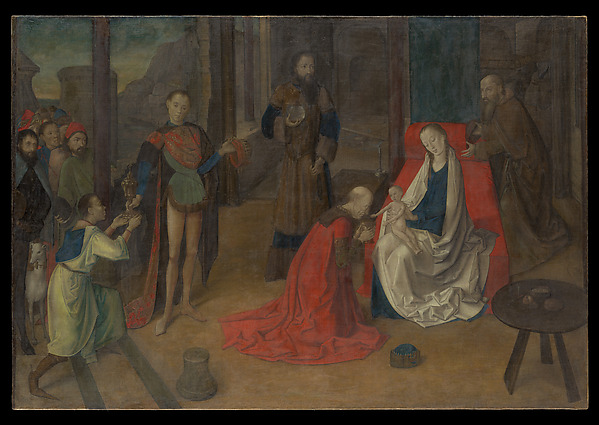
Image title: The Adoration of the Magi
Medium: Distemper on canvas
Date: 1472–74
Source:
The Met Collection
“
The art challenges the technology, and the technology inspires the art.
”
— John Lasseter
Tattooed Saints and Painted Shamans: Body Art as Sacred Symbolism Across Cultures
Introduction: The Canvas of the Divine
From cave walls to cathedrals, humans have always used visual art to converse with the sacred. Yet one of the oldest and most intimate forms of art has often been overlooked: the human body itself. Across continents and centuries, tattoos, scarification, body paint, and piercings have acted as markers of status, protection, devotion, and transformation. This article explores the spiritual and cultural dimensions of body art, showing how ink and incision serve not merely as decoration, but as conduits for transcendence.
1. Painted Ancestors: Indigenous Ritual and the Origins of Body Art
Long before the written word, indigenous cultures used the body as text—inscribing their beliefs, myths, and societal roles into skin. The tatau of Polynesian cultures, the scarification of West African tribes, and the ochre-painted faces of Australian Aboriginals were not merely aesthetic choices—they were acts of ancestral continuity. In Māori culture, for example, the intricate moko facial tattoos acted as living genealogies, mapping lineage and social standing. Similarly, among the Kayapo people of Brazil, body paint in vivid patterns serves to align individual identity with the sacred cycles of nature, marking stages of life and participation in the spiritual fabric of the community. These traditions reveal a world where body modification was a sacred link between the corporeal and the cosmic.
2. Saints on Skin: Body Art in Religious Iconography
As organized religion emerged, body modification retained its spiritual power, though often co-opted in new forms. In Christian martyrdom narratives, saints were admired for enduring mutilation in the name of faith, and their bodily wounds became visual symbols of divine truth. St. Sebastian’s pierced body, for instance, was a recurring icon in Renaissance art, symbolizing both suffering and transcendence. Beyond metaphor, early Christian ascetics like the Desert Fathers practiced bodily mortification—an extreme form of body modification—as a way to purify the soul and attain closeness to God. Meanwhile, in Hindu traditions, sadhus marked their foreheads and bodies with ash and pigment to indicate spiritual renunciation. In all these instances, the body became not just a site of devotion but a medium through which divine will was made visible.
3. Modern Ink: Postcolonial Reclamation and Identity Politics
The spread of European colonialism disrupted indigenous body art traditions, often labeling them as savage or sinful. Yet, in the late 20th century, tattooing and body modification experienced a renaissance—especially in postcolonial nations—becoming acts of cultural reclamation. For the Quechua and Ainu peoples, revitalizing traditional tattoo practices meant reaffirming erased ethnic identities. Simultaneously, in the West, tattooing evolved from subcultural rebellion to mainstream art, offering a platform for individuals to inscribe their beliefs and traumas visually onto their own skins. Feminist and LGBTQ+ communities embraced body art as a way to reclaim bodily autonomy and narrate personal histories, transforming what was once stigmatized into sacrosanct forms of self-expression.
4. Sacred Machines: Technology, Spirituality, and the Digital Body
In our digital age, body art has intersected with technology in fascinating ways. Biohacking communities implant LEDs and magnets into their bodies as expressions of posthuman spirituality—a blend of cyborg aesthetics and metaphysical exploration. Tattoo machines now incorporate AI-generated designs, while augmented reality (AR) projects symbols onto skin, expanding what bodily art can mean and achieve. For some, these innovations are merely aesthetic. But for others, they are transhuman rituals, enhancing the body not only functionally but spiritually. The idea of the human body as a divine interface persists, but now it includes code, circuitry, and virtuality.
5. Conclusion: The Skin as Scripture
Across time, the body has remained an unwavering canvas for the sacred. While the materials and meanings have evolved—from natural pigments to nanopixels, from tribal insignia to biomechanical implants—the impulse is fundamentally the same: to make the invisible visible. Whether a Papua New Guinean warrior thick with ceremonial paint or a modern seeker adorned with symbols of past pain and future hope, the human body continues to tell spiritual stories. In every culture, in every era, skin can be scripture, and to alter it is to participate in a deeply human—and deeply divine—act of communication.
Useful links: