“
Take things as they are. Punch when you have to punch. Kick when you have to kick.
”
— Bruce Lee
When Weavings Speak: The Visual Rhetoric of Andean Khipus as Proto-Art
Introduction: The Silent Language of Knots
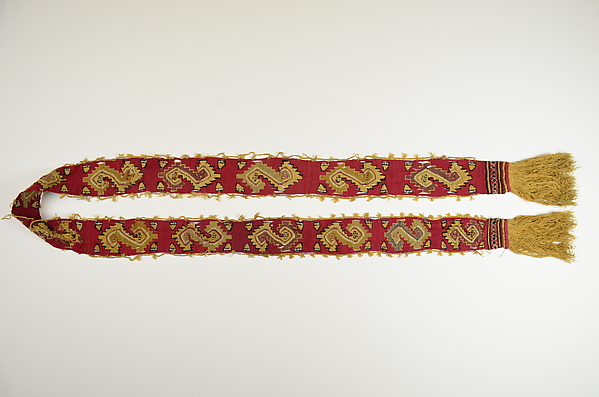
At a glance, the khipu might appear as an enigmatic cluster of colorful cords and knots. But to the Andean civilization—particularly the Inca—it was a language, a ledger, and arguably, an expression of proto-art. Far from the realm of ink and parchment, these weavings encoded stories, numbers, and knowledge, using tactile structure in lieu of written symbols. Today, scholars are beginning to understand khipus not only as utilitarian tools but also as visual compositions that embody the early conceptual tension between information and aesthetics—a tension foundational to what we now classify as visual art.
Chapter I: Preliterate Abstractions—Art Before the Alphabet
Before writing systems became widespread, humanity turned to material culture to represent meaning, memory, and power. In the Andes, this took a unique and sophisticated form: the khipu. Emerging from pre-Inca cultures and reaching their zenith under the Inca Empire (15th–16th centuries CE), khipus used combinations of knot type, cord color, material, and positioning to communicate. This multilayered symbology suggests an early inclination toward abstraction, much like later visual art traditions. While Mesopotamia carved language into clay tablets, the Inca threw threads into a three-dimensional matrix that scholars now regard as both script and sculpture.
Chapter II: The Inca Renaissance—Order, Power, and Aesthetic
In the hands of the Inca, khipus became instruments of imperial administration, taxation, and even potentially narrative. Khipu-makers, called khipukamayuq, held esteemed positions akin to scribes of literate societies. Their role straddled the empirical and the aesthetic—their creations had to be accurate archives, yet conformed to visual cadence: balanced patterns, harmonious hues, and rhythmic spacing. Considered alongside Inca architecture and textile design, khipus reflect the civilization’s holistic view of order, where political control was mirrored in cosmic symmetry and color associations. Their visual logic invites us to frame them as an early form of conceptual art, where form and function are inseparable.
Chapter III: Colonization and the Erasure of Threaded Texts
The Spanish conquest in the 16th century brought not only military ruin to the Inca but also epistemic violence. Khipus, incomprehensible to European eyes, were often destroyed or dismissed as primitive. In an era dominated by alphabetic supremacy, anything unreadable was seen as valueless. Yet, ironically, the same aesthetic abstraction that made khipus illegible to colonists now positions them in dialogue with 20th-century modernism. Artists like Paul Klee and Anni Albers would later explore similar principles: rhythm in repetition, meaning through materiality, and the power of pure design—a posthumous vindication of Andean abstraction.
Chapter IV: A Semiotic Tapestry Reconsidered
Modern scholarship, bolstered by computational technology, has begun decoding the logic behind khipus. Gary Urton and his colleagues proposed that each khipu might encode binary-like information, potentially a positional precursor to digital computing. From this perspective, khipus are not primitive but complex, structured, and sophisticated. Simultaneously, artists and theorists have started restoring khipus to the realm of art—revisiting them as sculptural data-objects that bridge tactile language, cultural memory, and visual harmony. Their resistance to linear textual interpretation only enhances their mythic stature and art-historical significance.
Chapter V: Khipus in Contemporary Art and Memory
In recent decades, artists from Latin America and beyond have turned back to the khipu as both muse and metaphor. Peruvian artist Elena Tejada-Herrera and Chilean Cecilia Vicuña invoke khipus in their installations to speak to indigenous histories and environmental loss. Vicuña’s “Quipus” series stages massive, suspended cords in gallery spaces, transforming ancient data into immersive, almost liturgical experiences. These contemporary echoes reaffirm the visual and political resonance of the original khipus—reviving a pre-colonial visual language for postmodern critique. In their vibrancy, ambiguity, and resilience, khipus call us to see art not as the privilege of Western culture but as a universal instinct—to encode, communicate, and commemorate.
Conclusion: Threads of Time, Threads of Thought
Khipus remind us that art and language are not fixed categories but fluid expressions of cultural need and creativity. As proto-artifacts, they straddle the boundary between record and representation, sentence and sculpture. They silently testify to an advanced Andean epistemology—one that grasped complexity through color and ciphered reality with thread. In recognizing their aesthetic intelligence, we stitch new meanings into the fabric of art history itself.
Useful links: