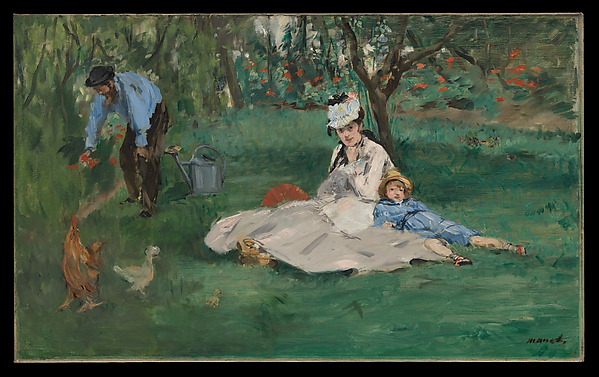
Image title: The Monet Family in Their Garden at Argenteuil
Medium: Oil on canvas
Date: 1874
Source:
The Met Collection
“
The meaning I picked, the one that changed my life: Overcome fear, behold wonder.
”
— Richard Bach
‘Palettes Behind Bars’: Prison Art Movements That Changed National Narratives
Introduction: When Canvas Meets Concrete
Art has long served as a mirror to society, but rarely has that mirror been held up from within a prison cell. Across centuries and continents, incarcerated individuals have turned to painting, collage, and sculpture not merely as pastimes, but as radical acts of self-expression, protest, and transformation. In doing so, they challenged public perceptions not only of themselves, but also of justice, redemption, and humanity itself. ‘Palettes Behind Bars’ examines five transformative eras of prison art that reshaped national narratives and cultural consciousness.
1. The Roots of Resistance: 19th-Century Penal Reform and Forced Creativity
In the 19th century, the rise of industrialized prison systems in Western Europe and the United States brought with it stark walls and bleak routines. But even in the harshest conditions, fragments of artistic ingenuity emerged. Incarcerated individuals—many of whom were political prisoners or victims of colonization—crafted drawings, carvings, and religious iconography using limited materials like soap, fabric scraps, and charcoal. In places like Eastern State Penitentiary and London’s Pentonville Prison, early glimpses of prison art doubled as both spiritual solace and political subversion.
The philosophical landscape of the time, shaped by thinkers like John Stuart Mill and Fyodor Dostoevsky, emphasized individual conscience and moral introspection, concepts that subtly influenced the art created in confinement. These early works challenged the notion that prisoners were irredeemable, instead proposing that creativity could serve as evidence of moral and emotional complexity.
2. Mid-20th Century: Civil Rights and the Rise of Artistic Protest
The 1950s through 1970s marked a seismic shift in prison art, as the Civil Rights Movement intersected with mass incarceration in the United States. Artists such as Emory Douglas, who shaped the visual language of the Black Panther Party, and George Jackson, whose writings inspired visual interpretations by other imprisoned artists, used art as a form of direct resistance. Collage and screen print became accessible and potent tools to communicate political identities and systemic critiques from behind bars.
This period also saw prisoners organizing art classes and exhibitions in collaboration with activists and academics. The creation of prisoner newspapers featuring artwork and the establishment of programs like the Prison Arts Project in California gave hundreds of incarcerated individuals a voice amid a culture of silence. The content revealed a deep engagement with themes like black liberation, indigenous rights, and carceral capitalism—a powerful revision of justice narratives visible through paint and ink.
3. The Aesthetic of Survival: Personal Mythologies in the 1980s and 1990s
In the 1980s and 1990s, as the War on Drugs and tough-on-crime policies expanded prison populations, a new kind of prison art emerged—one deeply introspective, symbolic, and often surreal. While earlier generations of prison artists framed their work around collective struggle, this era emphasized the personal myth. Artists used vivid imagery, symbolism, and dreamscapes to explore loss, memory, and spiritual survival.
One key figure was Gilberto Rivera, whose mixed-media collages combined Catholic iconography with urban Americana. His pieces depicted both the anguish and resilience of incarceration, resonating with postmodern artistic trends outside the prison system. The rise of outsider art and interest in raw, visceral aesthetics in the contemporary art world found an unlikely parallel within prison walls, challenging the boundary between ‘insider’ and ‘outsider’ in both art and society.
4. Digital Echoes in Iron Spaces: The 2000s and Virtual Galleries
The early 2000s introduced a unique contradiction: while prisoners were cut off from the internet, their art was increasingly showcased online. Projects like The Prison Arts Coalition and the Prison Art Gallery in Washington, D.C. began digitizing inmate artwork, making it accessible to global audiences. This technological leap altered public dialogues, fostering empathy and reconsideration of rehabilitative justice.
Some artists, like Jared Owens, created striking abstract works exploring themes of spatial distortion and power. Owens, who smuggled pigments and brushes into prison, now has his art displayed in mainstream galleries. Meanwhile, platforms like Instagram became tools for families and advocates to share images of inmates’ work, creating a new kind of visibility rooted in digital activism.
5. From Cellblock to Museum: 2010s to Present – Redefining the Canon
In the 2010s and into the present, prison art has not only entered but also begun to reshape the institutional spaces of art itself. Exhibitions like ‘Marking Time: Art in the Age of Mass Incarceration’ at MoMA PS1 brought works by incarcerated artists into elite cultural discourse. These exhibitions forced viewers to confront the human cost of incarceration while celebrating the creative intellect that thrives even in oppression.
The contemporary prison art movement also intersects with broader cultural reckonings about systemic racism, mental health, and the ethics of justice. Artists like Russell Craig, whose poignant portraits speak to trauma and resistance, highlight that art created in confinement carries not only aesthetic value but also ethical urgency. Today, prison art is not fringe; it is critique, consciousness, and contemporary.
Conclusion: Creative Defiance Beyond the Bars
The story of prison art is not just about what is created, but about the assertion that the human spirit—and its will to create—cannot be erased by punishment. From etchings on stone walls to curated sculptures in modern museums, these works collectively defy erasure. They demand recognition from a society too often comfortable ignoring what happens behind prison doors. In doing so, they reshape our understanding of justice, punishment, and the redemptive power of art.
Useful links: