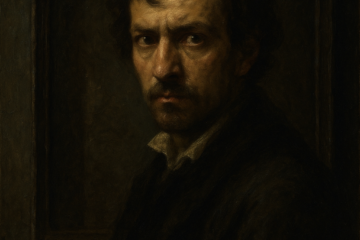
Image title: Hermann von Wedigh III (died 1560)
Medium: Oil and gold on oak
Date: 1532
Source:
The Met Collection
“
The philosophy of the school room in one generation will be the philosophy of government in the next.
”
— Abraham Lincoln
Draped Universes: The Philosophy Behind Fabric in Baroque Sculpture
Introduction: Stone in Motion
At first glance, the swirling folds of fabric in a Baroque sculpture might seem like mere ornamentation—an aesthetic addition to heighten naturalism or drama. But for sculptors like Gian Lorenzo Bernini, drapery was more than surface beauty; it was a philosophical tool. By mastering the illusion of soft textile in hard marble, Baroque sculptors transformed gestures into metaphysical statements, suspending time and space through stone. This blog explores how drapery evolved from a compositional device to a cosmic symbol in Baroque sculpture—and what it tells us about art, spirituality, and the nature of reality.
1. Classical Roots: Drapery as Ideal Form
The philosophical journey of drapery in art begins in classical antiquity. Ancient Greek sculptors like Phidias and Praxiteles used fabric to complement the idealized human body. Drapery revealed the form, enhancing the structure and rhythm of a figure while also suggesting movement. In sculptures such as the “Venus de Milo,” the flowing garments added sensuality and dynamism, while also serving as a narrative and symbolic device—denoting status, emotion, or divine favor. Yet the focus was predominantly physical and formal, aligned with Platonic ideals of harmony and proportion. The Hellenistic period pushed this further, experimenting with deeper folds and kinetic movement, prefiguring the more expressive possibilities that Baroque artists would later seize and redefine.
2. Medieval Symbolism: Fabric as Sacred Shroud
In the Middle Ages, drapery took on a new purpose: it became a symbol of spiritual reality. Christian art, particularly in Byzantine and Gothic forms, rarely pursued realism for its own sake. Instead, fabric was a signifier of divine truth. Gold-embellished robes, linear folds, and static silhouettes conveyed celestial hierarchies and sacrosanct themes. Technological limitations aside, there was a philosophical basis to this abstraction. According to the medieval mind, the physical world was a shadow of a higher, spiritual one. Thus, drapery was rendered not in motion but as a veil—signifying mystery and the unknowable divine. It was less about material representation than metaphysical suggestion.
3. Renaissance Revival: Reclaiming Nature
With the Renaissance came a renewed interest in naturalism, influenced by the rediscovery of classical texts and techniques. Artists like Michelangelo and Leonardo da Vinci studied drapery as a visual science. Da Vinci’s drawings of folded linen demonstrate an empirical approach—understanding how fabric responded to different body movements and materials. Yet even in this heightened form of realism, drapery was still deeply symbolic. It represented knowledge, revelation, and the interface between the visible and invisible. The rise of Humanism placed the human form back at the center of art, and fabric became both a framing device and an extension of psychological depth. Drapery in the Renaissance became a fluent medium to convey the complexities of human experience—an evolution that set the stage for even more dramatic interpretations in the Baroque.
4. Baroque Splendor: Bernini and the Divine Pulse
Gian Lorenzo Bernini, the genius of the Baroque, revolutionized drapery’s implication in sculpture. Works like “The Ecstasy of Saint Teresa” (1647-52) show how he used violent swirls of cloth—not just to carve motion, but to embody transformation. The fabric flutters in an otherworldly breeze, suggesting spiritual rapture, divine presence, even erotic tension. These are not garments reacting to physical movement—they are manifestations of internal, metaphysical forces. Bernini’s drapery exists in a suspended moment, outside time and gravity. Through chisel and mallet, folds become fluid, cascading waves of spiritual intensity. His sculptures collapse the boundary between material and immaterial, much as Baroque theology sought to link Heaven and Earth. Here, fabric is no longer about the body—it’s about the soul’s encounter with the infinite.
5. Legacy: Drapery in Contemporary Thought
Even in contemporary sculpture and digital art, the Baroque legacy of sculpted drapery continues to resonate. Artists like Barry X Ball or even digital creators experimenting with 3D avatars use algorithmically generated folds to evoke emotion and expand on the Baroque metaphor of motion and transformation. Philosophers such as Gilles Deleuze have interpreted Baroque drapery as a metaphor for multiplicity—folds within folds, endlessly dividing and morphing, a vision of reality as dynamic and unstable. In these contexts, fabric is not decorative but ontological—it represents becoming, change, and the porous limits of form. The legacy of Bernini’s swirling robes thus lives not only in marble but in data, pixels, and threads of philosophical inquiry.
Conclusion: The Fold as Universe
From the temples of Athens to the basilicas of Rome, and into the immersive realms of digital sculpture, drapery has evolved from modest garment to profound mode of expression. In the hands of Baroque masters like Bernini, it transcended decoration to become a language of motion, time, and divine encounter. These folds map out metaphysical trajectories; they envelop us not merely in fabric, but in the very rhythms of existence. To behold one of these sculptures is not just to see stone but to witness a universe in motion—draped, suspended, and eternally unfolding.

Image description:
File:Cornelis Norbertus Gijsbrechts – Still life with drapery and gilded jugs.jpg
License:
Public domain
Source:
Wikimedia Commons
Useful links: