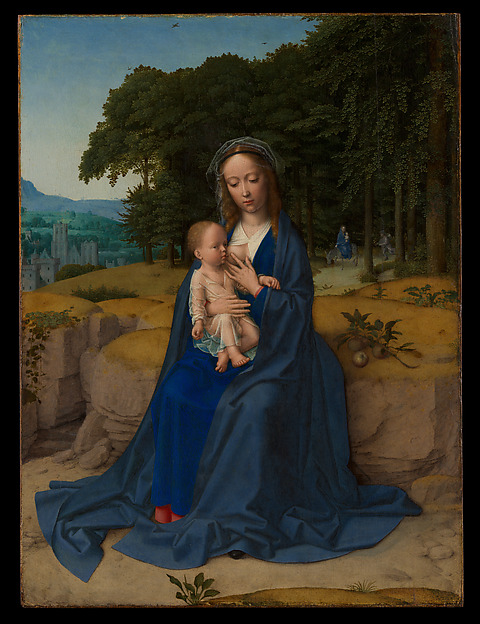
Image title: The Rest on the Flight into Egypt
Medium: Oil on wood
Date: ca. 1512–15
Source:
The Met Collection
“
He who lives in harmony with himself lives in harmony with the world.
”
— Marcus Aurelius
Queer Chiaroscuro: Hidden Lives Illuminated in Renaissance Shadows
Introduction: The Concealed Radiance of Identity
The Renaissance is often remembered as an age of luminous creativity and artistic renaissance, where artists resurrected classical ideals and celebrated human form and philosophy. Yet buried within the glowing textures and dynamic shadows of this period lies another story—one not boldly proclaimed, but subtly whispered through brushstrokes and symbolism. The queer identity, imperiled by social norms and religious doctrine, found shelter in the chiaroscuro—in the shadowy recesses of dramatic lighting and classical allegory. This article explores the coded language of Renaissance art, decoding subtextual expressions of queerness that were masterfully hidden but powerfully present.
1. Classical Echoes: Antiquity Reborn, Desires Rekindled
The Renaissance was fueled by the rediscovery of Greco-Roman art and literature, cultures that held complex, often more tolerant views on same-sex relationships. Artists like Michelangelo and Leonardo da Vinci were deeply influenced by classical ideals, and their works subtly integrate themes of male beauty and homoerotic admiration. In Michelangelo’s sculptures—such as his ‘David’ or the figures populating the Sistine Chapel—the elongated ideal of the male body is not merely a celebration of form but can be read as a personal ode, infused with longing and reverent affection. While never explicit, the works echo a past where such admiration was normatively depicted, offering a subjective cover beneath antiquity’s accepted heritage.
2. Sacred Codes and Profane Longing
In religious commissions—still the dominant form of patronage—queer coding required greater discretion. The use of Biblical or saintly figures allowed artists to veil forbidden yearnings within theological frameworks. Take for instance the relationship between Saint Sebastian and his recurrent effeminate portrayal. Artists rendered Sebastian’s martyrdom—a pierced, semi-nude body writhing in ecstasy—as both sacred iconography and sensual tableau. It became a safe canvas for homoerotic imagination, celebrated through tender attention to musculature and expression. Likewise, depictions of David and Jonathan or Christ surrounded by apostles allowed artists to hint at deep male intimacy under the cover of spiritual fraternity.
3. Mythological Mirrors: Allegory and the Fluid Self
Classical mythology, with its pantheon of gender-fluid deities and polymorphous narratives, offered fertile ground for encoded identity. The stories of Ganymede—a beautiful youth abducted by Zeus—and the androgynous Hermaphroditus served as allegorical devices to explore non-normative desires. Artists like Caravaggio masterfully merged mythology, realism, and theatricality, as seen in his ‘Amor Vincit Omnia’—where the god of love is painted as a gleeful adolescent boy, delightfully ambiguous and provocatively posed. These myth-based works offered artists a legitimized avenue to depict non-heteronormative beauty and desire, wrapped in revered tales and sanctioned by classical authority.
4. The Theater of Shadows: Chiaroscuro as Emotional Veil
Renaissance chiaroscuro was more than a stylistic flourish—it was a psychological tool. Dramatic contrast between light and dark served to underscore emotional tension, ambiguity, and layered meanings. Caravaggio, a master of the technique and a man whose own life was riddled with rumors and legal trouble related to his personal affairs, used lighting not only to dramatize scenes but to emphasize fleeting moments of vulnerability and desire. His ‘John the Baptist’ paintings, portraying a solitary youth in repose and partially lit by divine radiance, dance dangerously close to sensual introspection. The strategic play of shadows can be read as a metaphor for hidden identities—lighter zones revealing fragments of self, darkness concealing protected truths.
5. Legacy and Liberation: Rediscovering Lost Narratives
Today, the art historical community continues to revisit these masterpieces, unpacking layered identities and reassessing

Image description:
Dahlia ‘Alauna Clair-Obscur’ Robert, 2002. The Botanical Garden of the University of Latvia
License:
CC BY-SA 4.0
Source:
Wikimedia Commons
Useful links: