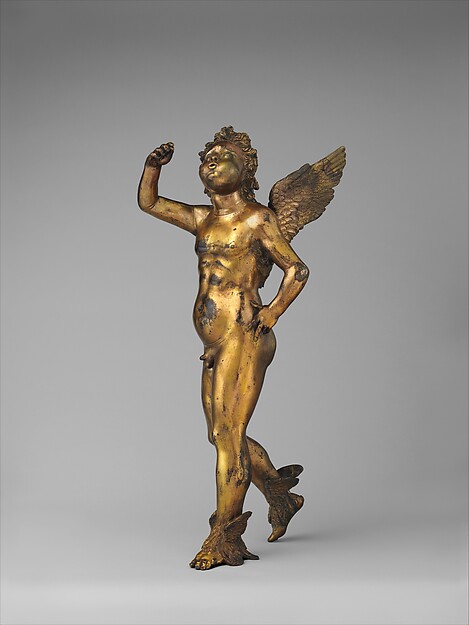
Image title: Sprite
Medium: High-copper alloy, fire-gilt, brown natural patina where exposed
Date: 1432
Source:
The Met Collection
“
Do more than dream: work.
”
— William Arthur Ward
More than Marble: Black Sculptors Transforming Classical Traditions
Introduction: Reframing the Pedestal
The marble bodies of Greco-Roman antiquity have long stood as the epitome of artistic perfection in the Western canon. From Michelangelo’s David to the Roman copies of Greek originals, these statues have defined standards of beauty, proportion, and cultural supremacy for centuries. Yet in recent years, a powerful and necessary shift has been underway—led by contemporary Black sculptors who are not merely mimicking classical forms, but subverting and transforming them. These artists are reclaiming the visual language of antiquity to narrate Black histories, identities, and futures. This article traces an arc from classical foundations to radical reimaginings, exploring how Black sculptors break the stone ceiling to re-carve space within the canon.
Chapter 1: Classical Ideals and Colonial Echoes
The Western classical tradition, shaped by the art of ancient Greece and Rome, privileged whiteness both in marble material and metaphor. Neoclassicism in the 18th and 19th centuries reinforced these ideals, as European empires used Greco-Roman aesthetics to assert cultural superiority and legitimize colonial ambitions. The canon, in effect, excluded non-white bodies from visual representation unless as servants, subjugated figures, or exoticized others. The whiteness of marble became conflated with beauty, decorum, and power—a notion that Black contemporary sculptors now actively deconstruct.
Chapter 2: Reclaiming Form—The Rise of Counter-Monuments
Early 20th-century Black sculptors such as Meta Vaux Warrick Fuller and Augusta Savage began contesting traditional narratives by introducing Black profiles and stories into public art. However, the revolutionary reworking of classical forms took fuller shape in the late 20th and early 21st centuries. Here, artists didn’t just represent Blackness—they interrogated the forms themselves. Kehinde Wiley’s “Rumors of War” (2019), for example, mirrors the equestrian statues of Confederate generals but replaces them with a statuesque young Black man in modern streetwear. Shonibare’s headless figures in Victorian garb, or Sanford Biggers’s reassembly of African sculptural aesthetics within Greco-Roman bodies, further destabilize the original ideals and codes embedded in classical sculpture.
Chapter 3: Material Matters—From Marble to Mixed Media
While marble remains a symbol of permanence, many contemporary Black sculptors deliberately shift materials to evoke fragility, temporality, or technological hybridity. Artists like Simone Leigh use terracotta, raffia, and bronze to merge African traditions with classical poise. Her monumental works—such as the U.S. Pavilion at the Venice Biennale in 2022—stand not in marble’s cold distance but in tactile, earthy intimacy. Similarly, Thomas J. Price sculpts massive Black figures that command space once reserved for kings and soldiers, often in bronze or composite materials that challenge the visual hierarchy of material itself, confronting viewers with questions of worth, visibility, and monumentality.
Chapter 4: Philosophical Inversions—Interrogating the Gaze
Beyond physical form, these sculptors also challenge how we look. There’s an essential philosophical pivot: from being gazed upon to returning the gaze, from object to subject. Black bodies rendered in styles traditionally used to enshrine idealized white form demand reconsideration of beauty, vulnerability, and power. Titus Kaphar literally cuts into classical-style canvases and sculptures, disrupting their narrative authority. His practice reveals hidden histories beneath Eurocentric veneers, asking: What is preserved, and what is erased in the canon? In doing so, these artists embrace what bell hooks calls “the oppositional gaze”—a critical look that resists and reconstructs.
Chapter 5: Digital Chisels and AFROFuturism
Emerging technologies are reshaping sculpture as well. Artists like Nettrice Gaskins incorporate AI-driven design, 3D printing, and algorithmic modeling into their work—melding ancient iconographies with digital cosmologies. This techno-cultural synthesis embodies an Afrofuturist ethos. It’s no longer just about reclaiming the past but designing futures where the Black body isn’t marginal but central. These artists do not just decolonize classical traditions—they reprogram them, turning sculptures into systems of memory, protest, and projection. In this future-facing terrain, the ‘marble’ isn’t marble at all—but data, code, imagination.
Conclusion: Canon as Commons
Classical sculpture was once the trophy of empire, symbolizing timelessness and superiority. Today, Black sculptors repossess that same visual language with urgency, nuance, and innovation. They transform white stone into a medium of Black resilience, critique, and creativity. In their hands, Greco-Roman ideals are neither rejected entirely nor emulated passively—they are reinhabited, deconstructed, and reborn. Ultimately, they remind us that art history isn’t a fixed canon, but a living, breathing commons—one that must expand to hold all of our stories in full volume and visible form.

Image description:
Sculpture at Schoenthal- Hamish Black, YP 1, 1998
License:
CC BY-SA 3.0
Source:
Wikimedia Commons
Useful links: