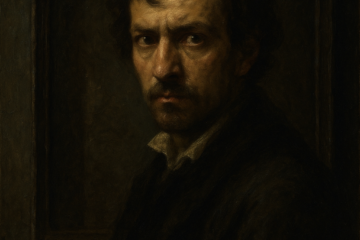
Image title: Hermann von Wedigh III (died 1560)
Medium: Oil and gold on oak
Date: 1532
Source:
The Met Collection
“
A passion for politics stems usually from an insatiable need, either for power, or for friendship and adulation, or a combination of both.
”
— Fawn M. Brodie
Papuan Shields and the Politics of Pattern
Introduction: More Than Protection
The fighting shields of Papua New Guinea stand as some of the most visually arresting artifacts in Oceanic art. Often painted with vibrant abstract patterns and symbolic imagery, these shields are far more than functional objects of war — they are carriers of cosmology, totems of identity, and surfaces for the projection of communal memory. Each stroke of pigment and carved notch speaks to an intricate web of cultural, spiritual, and social codes. In this exploration, we uncover how these sculptural paintings evolved across history, how colonial contact reshaped their meanings, and why they continue to inspire contemporary interpretations.
1. Carving Culture: Ancestry and Aesthetics in Pre-Colonial Times
Before the arrival of European colonizers, shields in Papua New Guinea — particularly among the Asmat, Highlands, and Sepik River communities — were created as expressions of both functional necessity and ancestral connection. Often made from hardwoods like Alstonia or hoop pine, shields were painted using natural pigments derived from clay, plant dyes, and charcoal. Their surfaces commonly displayed clan symbols, spirit figures, and eye motifs believed to ward off malevolent forces or transfer the spiritual energy of ancestors to the warrior. These patterns were not merely decorations — they encoded rights to stories, land, and family legitimacy, visually mapping long-standing histories through color and line.
2. The Design of Warfare: Form, Function, and Symbol
Papuan warfare was historically characterized by inter-tribal raids, feuds, and ritual concern for balance and revenge. In this context, the shield served dual roles: as physical defense and as psychological weapon. Designs could evoke aggression or provoke fear, with jagged lines suggesting violence or chaos, while concentric circles hinted at vision, surveillance, and omnipresent ancestors. Notable are the Mount Hagen shields of the Western Highlands, which display bold red-white-black compositions that communicate danger, resolve, and clan pride. Each area developed distinctive aesthetics, leading to shield types recognizable by form — such as narrow vertical boards or more rounded and engraved types in riverine zones — and by pattern vocabulary, finely tuned over generations.
3. Disruption and Displacement: Shields During Colonial Contact
Colonization in the late 19th and early 20th centuries brought transformative disruption to Papua New Guinean societies. German, British, and Australian incursions not only introduced new political hierarchies and religious ideologies but also began the extraction of cultural objects for museums and private collections. Many shields found their way into European ethnographic museums, where their meanings were often stripped or misinterpreted, seen through exoticist or anthropological lenses rather than as living cultural elements. Simultaneously, with firearms and new political structures altering inter-group dynamics, the functional use of shields in combat declined, prompting shifts in their symbolic status within communities. What was once part of a ritual of warfare often became ceremonial or purely decorative, raising questions about authenticity, memory, and continuity.
4. Aesthetic Afterlives: Shields in Contemporary Expression
While shields may no longer play an active combat role, their imagery and spiritual momentum persist. Contemporary Papua New Guinean artists, such as Mathias Kauage and Timothy Akis, have drawn upon shield motifs to explore identity, colonial residue, and modernization in visual language. Additionally, shields have become popular items in the Pacific art market, blending traditional forms with hybridized techniques. In these adaptations, we witness the resilience of pattern as a political tool — still conveying power, ancestry, and resistance. Beyond the Pacific, modern artists and designers globally have echoed the visual language of Papuan shields, imitating their symmetry, vibrancy, and symbolic density in textiles, installations, and digital art.
5. Reading Pattern Politically: Symbolism in the Global Context
To read a Papuan shield today is to trace the dense intersection of form and meaning across cultures and time. Their geometric forms invite analysis not unlike modernist art’s relationship with abstraction, while their embedded ancestral codes recall philosophical debates on the permanence and fluidity of cultural identity. The shield thus becomes not only an ethnographic object or wartime artifact but a dynamic visual text — articulating resistance, adaptation, and ongoing dialogue between tradition and innovation. In recognizing the politics of pattern, we also challenge ourselves to see design as never neutral — reflective of histories lived, contested, and continuously reimagined.
Conclusion: Shields as Living Language
Papuan shields ask us to consider how objects speak — how lines and shapes act as language, and how artistry becomes a form of governance. In their continued evolution, they surface key questions about cultural sovereignty, appropriation, and the vitality of old symbols in new contexts. Whether viewed in a museum, encountered in ritual, or evolving within digital media, these shields remain active participants in the global story of art — emblematic of the power embedded in pattern, and the enduring politics of painting.

Image description:
Taken from Ialibu town early in the morning.
License:
CC0
Source:
Wikimedia Commons
Useful links: