

Image title: Album of Landscape Paintings
Medium: Album of fourteen paintings and one calligraphy; Ink and color on paper
Date: late 18th century
Source: The Met Collection
“
Pitching is the art of instilling fear.
”
— Sandy Koufax
The Colors of Silence: Exploring Negative Space in Asian Art
Introduction: The Silent Echoes of Emptiness
Art has often been described as an expression of emotion, a conversation between creator and spectator. But what happens when silence, emptiness, or negative space becomes the focal point of this dialogue? In traditional Asian art, particularly in Zen ink paintings and contemporary minimalist works, negative space is not mere absence but a presence all its own—a canvas for contemplation and reflection. This approach mirrors cultural and philosophical views on emptiness, exploring how the void can hold as much weight as the elements that surround it.
Chapter 1: Zen Painting and the Art of Wu Wei
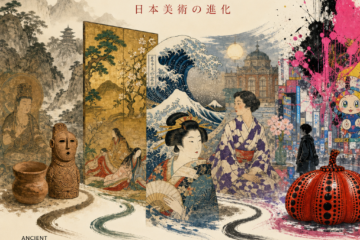
The principles of Zen Buddhism provide an exquisite backdrop for our examination of negative space in Asian art. Zen ink paintings, born from the spiritual practices of Buddhist monks, often employ the concept of ‘mu’ or emptiness. This is visualized through sweeping, sparse brushstrokes that leave vast areas of the paper untouched. This minimalism encourages viewers to silence their thoughts and feel a sense of tranquility and timelessness. The philosophy of ‘wu wei’ or non-action resonates in this practice, suggesting that sometimes the most profound action is inaction, allowing the simplicity of the piece to evoke depth and introspection.
Chapter 2: The Transition to Movement in Ancient Chinese Landscape Paintings
During the Tang and Song dynasties, Chinese landscape paintings began to embrace negative space in a more complex manner, using it as a tool to create balance and harmony between the depicted elements and the unpainted areas. This transition marked a shift in how artists perceived and utilized space, not just as a backdrop but as an integral part of the visual narrative. Landscapes were depicted with misty mountains and ethereal skies, suggesting not just what was visible but also what lay beyond perception—moving the viewer to engage with the art on a conceptual level.
Chapter 3: Cultural Reverberations in Japanese Zen Gardens
Following the influence of Chinese art, Japanese culture imbibed and transformed these ideas into its unique interpretations. Zen gardens, or ‘kare-sansui,’ serve as three-dimensional expressions of negative space, where rocks and sands are orchestrated to highlight the space between, rather than the objects themselves. These gardens are exercises in precise minimalism, inviting introspection and meditation on the beauty of the void. The garden’s design allows for shifts in perception with each viewer, offering a sensory experience meant to calm the mind and invigorate the soul.
Chapter 4: Contemporary Interpretations and Minimalist Movements
In the 20th century, minimalist art began to emerge globally, yet it continued to echo principles deeply rooted in Asian artistic traditions. Artists like Lee Ufan and Yayoi Kusama pushed the boundaries of how negative space can be utilized, employing it to create dialogue between form and emptiness, presence and absence. Their works ask viewers to question what is seen and unseen, using clean lines, repeated patterns, and open spaces that insist on the audience’s active engagement and participation in the art.
Conclusion: Embracing the Void
Negative space in Asian art reveals the profound appreciation these cultures have for balance, silence, and the unseen. These principles have transcended time and geography, continuing to inspire contemporary artists and art lovers alike. By embracing what is not immediately apparent, Asian art invites us into a space of reflection, offering not only an artistic journey but also a philosophical meditation on existence and perception. In a world filled with noise, learning to appreciate the colors of silence can be a deeply rewarding experience.

Image description: The Karesansui Dry Landscape Garden at the Fort Worth Japanese Garden at the Fort Worth Botanic Garden in Fort Worth, Texas (United States).
Artist: Michael Barera
Credit: Own work
License: CC BY-SA 4.0
Source: Wikimedia Commons
Useful links: