
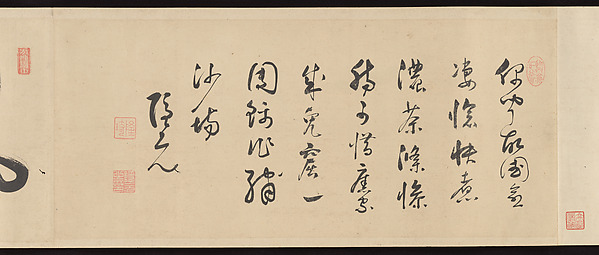
Image title: Handscroll of Calligraphy by Ōbaku Zen Monks
Medium: Forty-three sheets mounted as a pair of handscrolls; ink on paper
Date: mid-17th to mid-18th century
Source: The Met Collection
“
Sometimes being a friend means mastering the art of timing. There is a time for silence. A time to let go and allow people to hurl themselves into their own destiny. And a time to prepare to pick up the pieces when it's all over.
”
— Octavia E. Butler
From Samurai to Zen: The Evolution of Japanese Art Through Time
Japanese art has long been regarded as a tapestry woven from the threads of tradition, innovation, and philosophical depth. The journey from the vibrant Edo period prints to today’s contemporary installations is a fascinating exploration of cultural transformations, technological advances, and the enduring influence of Zen philosophy. In this blog post, we explore the key epochs and influences that have shaped the visual arts in Japan.
The Edo Period: A Blossoming of Print Culture
The Edo period (1603-1868) was a time of peace under the Tokugawa shogunate, enabling the arts to flourish. Ukiyo-e, or “pictures of the floating world,” captured the essence of Edo society. These woodblock prints depicted everyday scenes, famous kabuki actors, and beautiful landscapes. Renowned artists like Katsushika Hokusai and Utagawa Hiroshige produced works that would come to define Japanese art for centuries. Hokusai’s ‘Thirty-Six Views of Mount Fuji’ remains iconic, merging artistic precision with spiritual symbolisms prevalent during this era.
The Meiji Restoration: Art Encounters Modernity
The Meiji Restoration (1868-1912) heralded Japan’s opening to the West, sparking profound changes in its artistic expressions. Western techniques and perspectives collided with traditional Japanese aesthetics, creating hybrid forms. Artists such as Kuroda Seiki were pivotal in introducing Western-style painting (yōga) to Japan. The traditional Nihonga style evolved concurrently, leading to a vibrant dialogue between the old and new. During this era, Japan’s art scene illustrated a dichotomy reflecting the nation’s rapid modernization and internal struggle to preserve its cultural heritage.
Post-War Transformations: The Birth of Avant-Garde
The aftermath of World War II birthed a period of introspection and radical change in Japanese art. Artists began questioning traditional values and exploring avant-garde movements. The Gutai group, formed in 1954, became emblematic of post-war creativity, merging action, destruction, and performance art. Gutai artists sought to transcend boundaries, emphasizing freedom and the raw potential of materials. This transformative period laid the groundwork for further innovation and global recognition of Japanese contemporary art.
The Influence of Zen: Contemplation in Modern Art
Zen Buddhism has permeated many aspects of Japanese culture, and its minimalist philosophy plays a significant role in contemporary art. The simplistic, contemplative nature of Zen exerts a quiet yet powerful influence. Contemporary artists like Yayoi Kusama incorporate Zen concepts of infinity and self-obliteration in their work, reflecting a contemplative inner universe. Through installations and sculptures, Zen art challenges viewers to reflect, explore inner peace, and ponder existential questions in our rapidly modernizing world.
Contemporary Era: Technological Integration and Global Dialogue
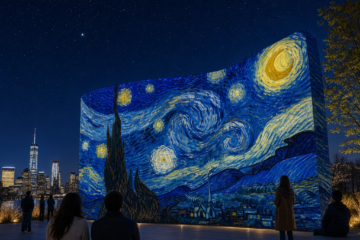
Today, Japanese art is an exciting amalgamation of technological innovation and social commentary. Digital art and media give artists new tools to work with, while globalization creates richer dialogues and collaborations with artists worldwide. Takashi Murakami’s “Superflat” movement critiques consumer culture and blurs traditional distinctions between high and low art. Meanwhile, installations and digital projections by TeamLab offer immersive experiences that merge the physical and virtual, signaling a new era of artistic expression often underpinned by the enduring wisdom of Zen.
The evolution of Japanese art is a testament to the country’s ability to navigate the intersections of tradition and modernity, the global and the local. Its art tells a unique story of cultural endurance, transformation, and artistic brilliance shaped by centuries of societal and philosophical influences.

Image description: Sea Bathing in Obama, Fukui (Osaka and Nagoya Rail Agency, 1930s). Japanese Poster (21" X 30").
Artist: Japanese Government Railways
Credit: Heritage Auctions
License: Public domain
Source: Wikimedia Commons
Useful links: