“
There are no failures. Just experiences and your reactions to them.
”
— Tom Krause
‘Altered States’: Drug Experiences Documented in Visual Art Across Cultures
Introduction: Colors Beyond Reality
Across time and continents, humans have sought to perceive realities beyond the everyday. Hallucinogenic substances—used ritually, recreationally, or medicinally—have offered artists portals to altered consciousness. These mind-expanding experiences are deeply woven into the tapestry of visual art history, from intense Amazonian trance paintings to the dreamy, swirling visions of European Symbolists. Let us journey through key moments when altered states fueled revolutionary shifts in artistic imagination.
Shamanic Visions: The Art of Ritual Hallucinogens
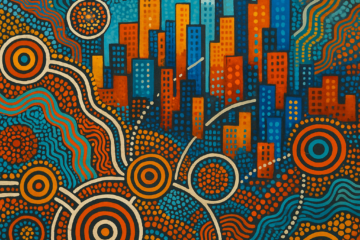
Long before the modern art world emerged, indigenous shamans across the Americas harnessed the visionary powers of psychoactive plants. In the Amazon, artists inspired by ayahuasca ceremonies painted the ‘unseen world’—an interlacing of serpents, jungle spirits, and geometric energies. Peruvian visionary Pablo Amaringo’s vibrant paintings echo ancient cave walls, depicting rivers of color and spirit allies encountered during trance. In North America, Huichol artists use peyote-induced states to create dazzling beadwork and yarn paintings full of cosmic symbolism. Here, art is not mere representation—it’s a living map of the spirit realm, a communion between the material and metaphysical that shapes cultural identity and spiritual power.
Opium and the Romantic Vision
As the Age of Enlightenment gave way to Romanticism in 19th-century Europe, artists traded reason for emotion and mysticism. Opium—revered as both muse and menace—spread across salons, studios, and parlors. Thomas De Quincey’s “Confessions of an English Opium-Eater” provided literary fuel, but it was painters who transformed narcotic dreams into visual poetry. Eugène Delacroix and Gustave Moreau portrayed exotic journeys suffused with strange atmospheres and colors. The French Symbolists—Odilon Redon among them—delved into dreamlike imagery, inspired not only by substances but also by currents in philosophy and psychology questioning the limits of perception.
The Green Fairy: Absinthe and the Birth of Modernism
In late 19th-century Paris, absinthe (“la fée verte” or the Green Fairy) became both symbol and stimulus for radical artistic change. Drunk in smoky cafés by writers, poets, and artists alike, absinthe was linked to hallucinations and exhilaration—whether real or imagined. Its influence is vividly apparent in Edgar Degas’ “L’Absinthe,” where desolation and intoxication blur reality. Vincent van Gogh, rumored to have imbibed copiously, created works with thick, swirling brushstrokes and otherworldly color palettes. The drink’s reputation entwined with technological advances in pigment and color theory, allowing Impressionists and Post-Impressionists alike to paint their own altered realities—art as the projection of a heightened, interior world.
Surrealism & Psychedelia: From Subconscious to Synesthesia
The dawn of the 20th century brought psychoanalysis and Surrealism. While Freudian dream theory and automatic drawing became new avenues for accessing altered states, Surrealists like Salvador Dalí and Max Ernst often drew on the visual grammar of drug-induced hallucinations. Decades later, the explosion of psychedelics in the 1960s reshaped contemporary art. Artists like Alex Grey and Mati Klarwein visualized LSD and psilocybin experiences with radiant energy fields, biomorphic forms, and synesthetic colors. Posters for rock concerts and underground comics reflected these visuals, merging countercultural currents with technological innovations like fluorescent paints and black-light printing.
Reflection: Altered States and the Art of Perception
The depiction of hallucinatory experience continues to inform contemporary artistic practice. Digital artists now use virtual reality to simulate altered consciousness, while others revisit ancient rituals for inspiration. Across cultures and eras, art records humanity’s enduring fascination with the mind’s capacity to expand, dissolve, and reinvent the boundaries of sight. Whether as sacred vision, poetic dream, or protest against consensus reality, altered states have been, and remain, an engine of artistic breakthrough—a testament to creativity’s limitless horizons.
Useful links: