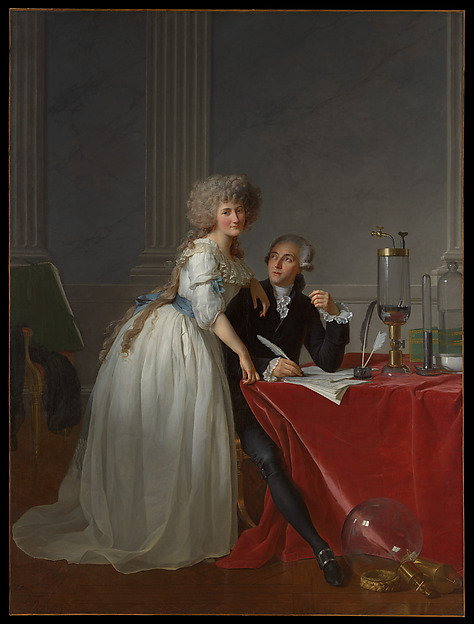
Image title: Antoine Laurent Lavoisier (1743–1794) and Marie Anne Lavoisier (Marie Anne Pierrette Paulze, 1758–1836)
Medium: Oil on canvas
Date: 1788
Source:
The Met Collection
“
Pitching is the art of instilling fear.
”
— Sandy Koufax
Rebel Pigments: The Chemistry of Color Revolutions in Art History
1. The Alchemy of Ancient Colors
In the earliest chapters of human creativity, artists were alchemists before chemistry existed. Pigments came from the earth — minerals, clays, and precious stones ground into powders that defined artistic expression for millennia. In ancient Egypt, the now-iconic blue adorning royal tombs was derived from a synthetic pigment called Egyptian blue, made by heating sand, copper, and natron. This invention, dating back over 4,000 years, was one of humanity’s first acts of material innovation in art. Likewise, red ochres, carbon blacks, and malachite greens formed a palette that was deeply tied to geography. To paint was to rely on the world’s raw materials, giving color both symbolic and spiritual weight.
Color, in this age, was not yet democratized — each pigment’s origin story was a tale of scarcity and danger. The deep reds from cinnabar carried mercury, and verdigris corroded metals. Artists were aware of color’s power but also its peril. Each hue, therefore, was a treasure and a risk, setting the stage for centuries of experimentation and transformation.
2. The Renaissance and the Poison of Beauty
The Renaissance introduced new technical mastery and reflected the intersection of art and reason. Yet, it was also an age of beautiful toxicity. Lead white — prized for its opacity and luminosity — was an essential component of every painter’s studio, despite its grave dangers. Artists like Titian and Vermeer layered it skillfully to capture light, producing ethereal effects that seemed to defy the material world. Meanwhile, ultramarine, the rarest and most expensive pigment of its time, came from lapis lazuli mined in Afghanistan. Its cost often exceeded that of gold, making it a symbol of both artistic excellence and economic privilege.
Color in this era was not just aesthetic; it was theological and philosophical. Blue was reserved for the robes of the Virgin Mary, suggesting celestial purity. Every pigment choice bore a moral and symbolic dimension. Yet the painter’s brush carried not only beauty but danger, as the chemistry of the time exposed artists to powders and fumes that silently exacted a toll on their bodies. The Renaissance palette, radiant and poisonous, was a mirror of humanity’s enduring paradox: to create beauty through risk.
3. The Birth of Synthetic Dreams
The Industrial Revolution ushered in one of the most radical transformations in the history of art — the rise of synthetic pigments. In 1826, French chemists perfected synthetic ultramarine, freeing artists from dependence on costly lapis lazuli. This democratization of color reshaped the art world. Suddenly, shades once reserved for sacred subjects became accessible to all.
Later, the accidental discovery of mauveine in 1856, the first aniline dye, heralded a new era of industrial color chemistry. A brilliant range of artificial hues flooded both fine art and fashion. This revolution made possible the vivid palettes of the Impressionists and Post-Impressionists. Artists like Monet and Van Gogh embraced new pigments such as chrome yellow, emerald green, and cobalt blue — colors that captured fleeting light, emotional moods, and the electric pulse of modern life.
Chemistry, for the first time, expanded art’s emotional vocabulary. Science and creativity became intertwined, turning color itself into a metaphor for industrial modernity.
4. Modernism’s Chromatic Liberation
By the early 20th century, pigments were no longer symbols of scarcity but of freedom. The modernists — Matisse, Kandinsky, and the Fauves — viewed color as an independent force, not bound to realism. The availability of strong, stable pigments enabled them to explore abstraction and psychological intensity. Painters began to treat color as language itself, capable of expressing inner states rather than external realities.
For Kandinsky, color corresponded to sound and emotion; for Matisse, it was a form of pure pleasure. Artists working amid the chaos of war and industrialization found in artificial color a kind of refuge — a controlled explosion of human feeling. Pigment chemistry became not just a tool but a philosophy, reflecting an age obsessed with progress and expression. Synthetic pigments like cadmium red and viridian green offered vibrant choices that matched the radical spirit of the times.
5. The Eco-Conscious Palette of Today
In contemporary art, pigment chemistry continues to evolve — but now with consciousness of its environmental and ethical dimensions. Artists and manufacturers are rethinking materials to reduce toxicity and ecological harm. Natural pigment revivalists work alongside nanotechnologists developing bio-based or light-reactive colors. The art world stands at a fascinating crossroads: technology not only provides brighter, more durable hues but also challenges us to create responsibly.
The rebellious spirit that once drove the creation of synthetic pigments now motivates the search for sustainability. Pigment innovation has always mirrored society’s anxieties and aspirations — from sacred minerals to chemical marvels, and now, to conscious creation. Each epoch of color tells a story not only of chemistry but of humanity’s evolving relationship with beauty, nature, and knowledge itself.
Conclusion: The Endless Spectrum of Discovery
The chemical revolutions in pigment production have profoundly shaped artistic history. From the toxic allure of lead-based whites to the democratizing brilliance of synthetic ultramarine, each innovation has transformed how artists see and represent the world. To study pigments is to follow a trail of rebellion — where the boundaries between science and art blur into a continuum of discovery. Every brushstroke carries a history of chemistry, courage, and curiosity — a reminder that the story of color is, ultimately, the story of human invention itself.
Useful links: