“
History is written by the victors.
”
— Winston Churchill
Ghosts in Marble: The Unfinished Sculptures of History
Introduction: The Beauty of the Unfinished
In the world of art, perfection is often held as an ideal. Yet some of the most captivating works in history are those that seem incomplete—caught between intention and realization. These unfinished sculptures, from Michelangelo’s brooding Slaves to fragmented modern installations, invite us to ponder not only the creative process but also the philosophical question of what it means to be complete. The unfinished can embody tension, spirit, and possibility—a dance between presence and absence that reveals the ghost of the artist’s hand.
Chapter I: Michelangelo and the Birth of the Unfinished
Perhaps no artist has given the incomplete form such enduring resonance as Michelangelo Buonarroti. His ‘Slaves,’ or ‘Prisoners,’ half-emerging from blocks of marble intended for Pope Julius II’s tomb, have haunted art lovers for centuries. These figures, seemingly struggling to free themselves from their stone prisons, are embodiments of both creative process and metaphysical yearning. Scholars debate whether these works were purposefully left unfinished or simply abandoned due to changing commissions. Either way, they mark a revolutionary shift: the unfinished becomes not failure, but revelation—a glimpse into the act of creation itself.
In Renaissance thought, the sculptor was seen almost as divine, freeing the ideal form hidden within the marble. By leaving parts rough and unpolished, Michelangelo exposed this divine struggle. The chisel marks became part of the artwork’s language, transforming incompleteness into expressive truth.
Chapter II: Fragmentation in the Classical and Romantic Imagination
Before Michelangelo, many ancient sculptures came to us ‘unfinished’ through the ravages of time—limbs missing, surfaces eroded. Greek and Roman fragments, far from being dismissed, were revered in the eighteenth and nineteenth centuries as embodiments of noble ruin. The Romantic era in particular celebrated the fragment as a poetic symbol of lost greatness and human transience.
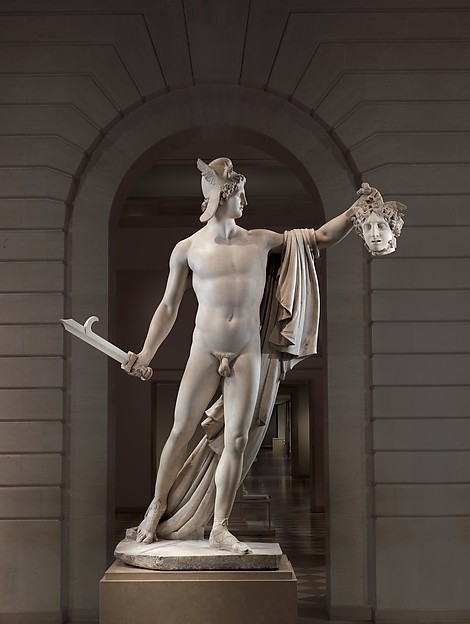
Collectors and artists like Antonio Canova and later Auguste Rodin studied these ancient fragments, translating their incomplete state into deliberate aesthetic practice. Rodin famously declared that a torso could be more expressive than a full figure—a belief that shaped works like ‘The Walking Man’ and ‘The Thinker,’ both oscillating between form and incompleteness. Here, the fragment became an active choice, a statement that wholeness was not the only path to meaning.
Chapter III: Modernism and the Process Made Visible
The twentieth century brought a radical redefinition of what ‘unfinished’ could mean. Modernist sculptors and theorists began to question the very notion of completion. Constantin Brâncuși refined forms to their essential gestures, blurring the boundary between polished artwork and raw block. Meanwhile, Alberto Giacometti’s attenuated figures seemed perpetually in progress—etched and reworked endlessly as though chasing an unattainable ideal. The unfinished state here mirrored existential philosophy: life itself as continuous pursuit, and art as an imperfect mirror of being.
For many modernists, the process became the artwork. The traces of creation—the marks, textures, or absences—spoke more truthfully than smooth perfection ever could. The studio became a theatre of becoming, and the sculptor, an actor in perpetual rehearsal.
Chapter IV: Conceptual Fragments in Contemporary Art
In contemporary practice, the idea of ‘unfinished’ has expanded beyond physical incompletion. Artists like Rachel Whiteread, Antony Gormley, and Doris Salcedo use absence and voids as conceptual materials. Their work often evokes loss, memory, and the boundaries between what is present and what has vanished. Whiteread’s casts of negative spaces—rooms, furniture, or entire houses—transform absence into substance, an inversion of classical sculpture’s solidity.
Other contemporary artists intentionally leave processes visible or forms unresolved, reflecting a world where perpetual change and uncertainty are inherent. In the digital age, even virtual sculptures, algorithmically generated and perpetually editable, represent a new kind of incompletion—open systems rather than fixed monuments. The unfinished thus becomes a metaphor for contemporary existence itself: fluid, iterative, and self-aware.
Chapter V: Philosophical Reflections on the Unfinished
The persistence of the unfinished raises a profound question: when is a work of art truly complete? Philosophers from Hegel to Heidegger have argued that art’s power lies precisely in its openness—its capacity to evoke meanings beyond closure. The unfinished sculpture embodies this principle materially. It invites the viewer to collaborate, to imagine what is missing, to complete the gesture in thought. It bridges the artist’s intention and the viewer’s perception, turning incompleteness into a shared act of creation.
Ultimately, the ghost within marble reminds us that every human endeavor carries traces of incompletion. Whether due to time, mortality, or deliberate choice, the unfinished speaks of life’s most universal truth—that becoming is more powerful than being. In these fragments, we do not see failure, but the perpetual breath of art’s living soul.
Conclusion: The Eternal Gesture
From ancient fragments to digital simulations, the unfinished remains a vital artistic concept. It resists perfectionism, celebrates process, and honors the transient. In every incomplete sculpture lives a ghost—not of what was lost, but of all that remains possible. The unfinished artwork, rather than a relic of imperfection, is a portal into infinity.
Useful links: