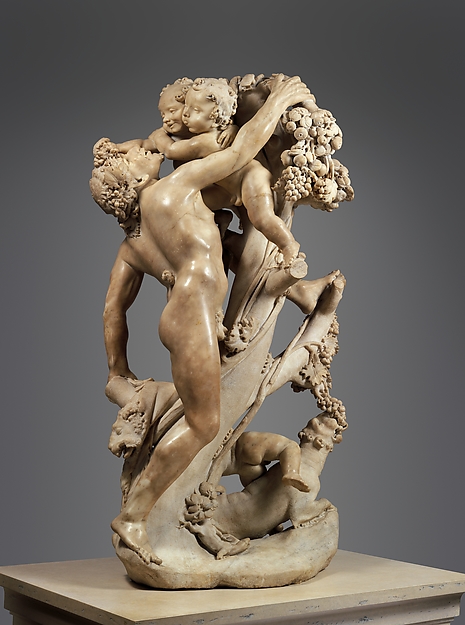
Image title: Bacchanal: A Faun Teased by Children
Medium: Marble
Date: ca. 1616–17
Source:
The Met Collection
“
Think as a wise man but communicate in the language of the people.
”
— William Butler Yeats
The Clay Codes of Ur: Sculpting Language in Ancient Mesopotamia
Introduction: Words Carved from Earth
Long before the digital age invited us to type effortlessly across screens, writing was a tactile, sculptural act—shaped, impressed, and pressed into permanence. Nowhere is this more vividly evident than in ancient Mesopotamia, where the earliest known written language—cuneiform—emerged through the careful sculpting of clay tablets. These artifacts not only represent the birth of written communication but stand as miniature monuments to human ingenuity in art and language. The city of Ur, one of Sumer’s most influential centers, bore witness to this revolution—a place where thought took shape, quite literally, in earth.
1. Genesis of the Script: From Tokens to Tablets
The roots of Mesopotamian cuneiform trace back to the late 4th millennium BCE, when simple clay tokens were used for administrative accounting across early urban centers. These tokens, often spherical or conical and inscribed with basic symbols, prefigured writing. As trade and governance became more complex, the need for a more sophisticated recording method emerged. In the proto-cuneiform stage, scribes began impressing pictographic characters onto clay tablets using a stylus made from reeds—a technique that turned ephemeral thought into a tangible record. These early inscriptions were both linguistic tools and visual cues, grown from the economic and spiritual lifeblood of the era.
2. The City of Ur and the Rise of Structured Language
By the 3rd millennium BCE, Ur had flourished into a city of infrastructural and cultural grandeur. Central to its achievements was the institutionalization of writing. Temple schools, called edubbas, trained scribes whose profession rested as much on artistic practice as scholarly ability. Tablets from Ur reflect a language increasingly abstracted—symbols once resembling cattle or grain transformed into linear impressions, developing into a system of nearly 600 characters. This condensing of image into abstraction reflects a philosophical shift toward categorization and control—language no longer merely depicted reality but systematized it, embodying a civilization moving from the mythic to the administrative.
3. Sculpting Meaning: Cuneiform as Artistic Artifact
Though we often compare writing to drawing, cuneiform was more akin to low-relief sculpture. Each wedge-shaped impression required pressure and intent, creating a subtle dance of form, geometry, and rhythm. Tablets became objects of beauty as well as bureaucratic necessity. The layout of entries, the spacing of lines, even the framing of the clay pieces, speak to an aesthetic sensibility that bridges utility and artistry. One might even argue that these sculpted texts were conceptually ahead of their time, anticipating the visual poetics of modern concrete poetry or the embedded symbology of conceptual art.
4. Technology of Hands and Clay
The materials and tools used by Mesopotamian scribes deeply influenced the visual texture of their writing. Clay, abundant and malleable, served as both medium and metaphor—flexible yet enduring. The stylus, usually a single-pointed reed, dictated the tectonic angularity of cuneiform script. This interdependence of medium and message prefigures contemporary debates about how technologies shape cognitive and artistic forms. The impression-based system of writing via stylus reveals an early awareness of interface and permanence. Unlike ink on parchment, cuneiform surfaces were records one could touch and weigh—the precursors, perhaps, to our digital tablets, where text again has tangibility.
5. Legacy: The Echo of Clay in Artistic and Cultural Memory
Though cuneiform eventually gave way to the scripts of empires that followed—Aramaic, Greek, Latin—it set the precedent for media as message. The clay tablets of ancient Ur laid the groundwork not only for literacy but for record-keeping, narrative, and the legal archive. From Hammurabi’s law code to the Epic of Gilgamesh, these artifacts whisper across millennia. Their presence continues to resonate with contemporary artists and typographers exploring the sculptural properties of text. Today, digital recreations and museum curation practices pay homage to the handcrafted legacy of these early tablets. In an age obsessed with speed and abstraction, the shaped words of Ur remind us that language once demanded the labor of hands, the patience of the artisan, and a partnership with earth.
Conclusion: Where Art and Language Were One
The cuneiform texts of ancient Mesopotamia straddle the identities of art and invention. They remedy the false division between visual aesthetics and linguistic function. In them, we glimpse a civilization shaping its thoughts in three dimensions, embedding meaning into clay—birthplace of the earliest written word. The legacy of these tablets goes beyond communication; it is a testament to the sculptural essence of early writing, where form and thought were inseparable, and every sentence began as an artifact.
Useful links: